Wired Contact Closure Relay at a Glance...
- Each Device Controls the Other Device
- Local Inputs Control Remote Relays
- Remote Inputs Control Local Relays
- 2 Contact Closure Inputs on Each Board
- 2 Relay Outputs on Each Board
- Sold in Pairs - Wired Operation Up to 1000' (300 Meters)
- Using 3-Wire Cable - No Computer, No Programming, No Set-Up
- Just Wire Them Up
- Works Together Right Out of the Box!
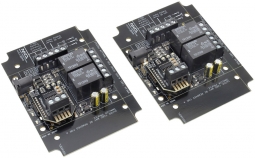
The Ideal Wired Choice
When wireless isn't allowed and network infrastructure isn't available, the MirX gives you dependable two-way control using just three wires. With a range of up to 1000 feet, it's a straightforward, reliable wired solution.
Flip a switch here and trigger a pump, gate, door lock, irrigation system - or flip one there and control something back here. Send clean dry-contact control up to 1000'.
MirX Contact Closure Control
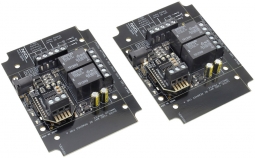
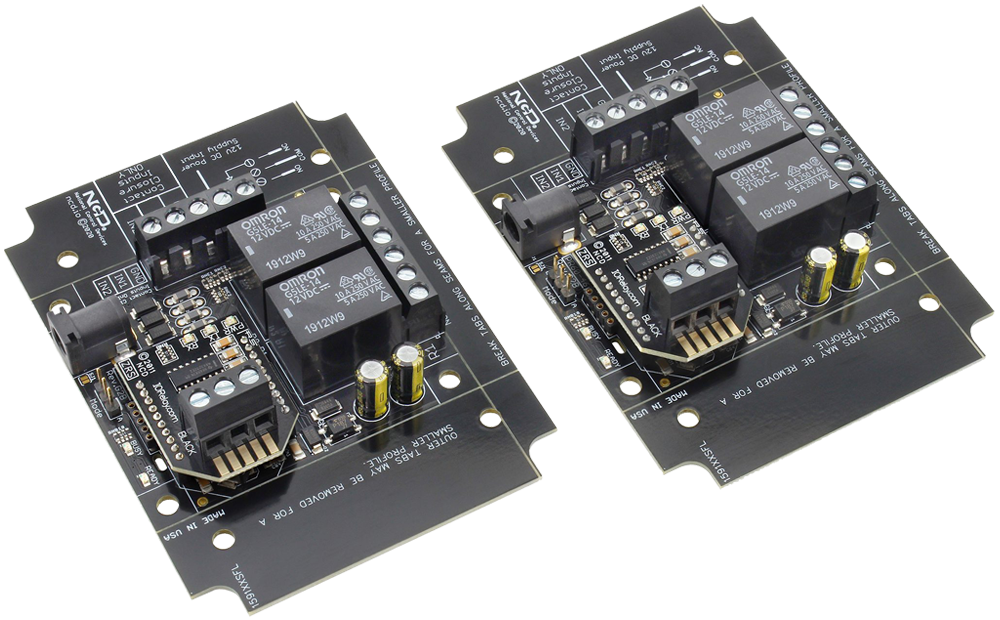
The MirX Contact Closure Relay system is sold as a pair of identical boards. Each board includes both contact closure input and onboard relay - the inputs on one board control the relays on the other. This creates a simple and flexible way to control devices in both directions between two locations using a 3-wire connection.Unlike traditional sender/receiver systems, both MirX boards can send and receive - giving you true two-way control right out of the box.
Wired Contact Closure
The sender accepts contact closure (no voltage) inputs, which instantly control the relays on the receiver board providing seamless, wireless communication between two points. Each purchase includes a complete MirX pair (both boards), ready to install.Contact Closure Input & Output
The relay on the receiver board can be used to either switch power to a device or act as a dry contact closure. This allows the MirX system to extend contact closure signals over long distances. Connect your device's contact closure (no voltage) to the Sender Board, and the Receiver Board will recreate that contact closure at the remote location.Choosing the Right Relay Amperage
The 2-Channel MirX boards include one dry contact input on the Sender Board and one relay output on the Receiver Board. The key difference between the options is the amperage rating of the relay installed. Select a board that matches the amperage required for your application.- SPDT relays are available in 5-Amp, 10-Amp, and 20-Amp versions.
- An SPST relay is available in a 30-Amp version.
💡 Relay Pros ProTip:
If you're controlling high-current loads like motors or heaters, always choose a relay with extra amperage headroom. Running a relay at its maximum rating can shorten its lifespan.