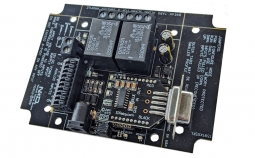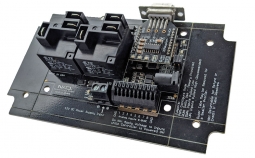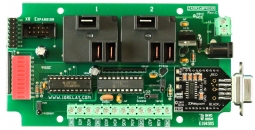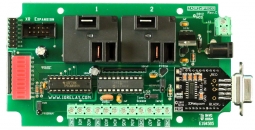
RS-232 Relay at a Glance...
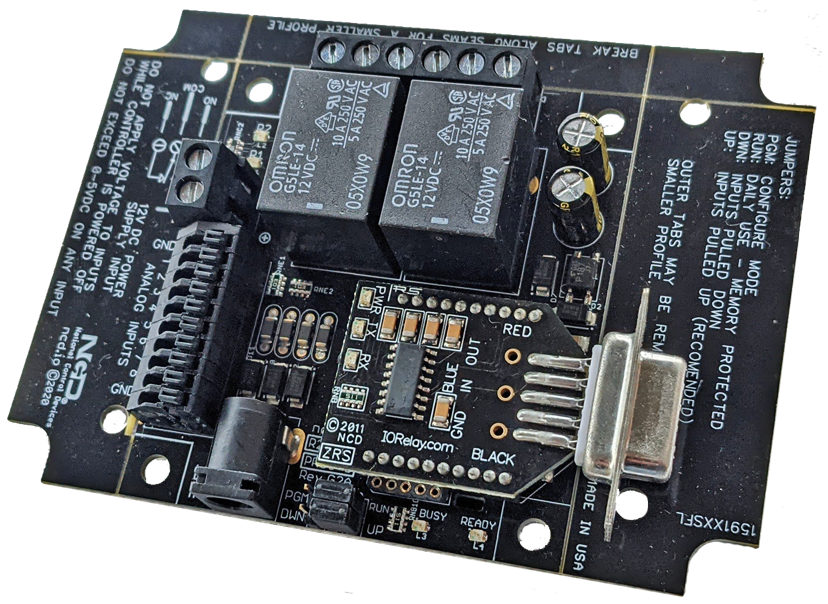
- 2 Relays Installed on a Circuit Board
- RS232 Interface with Choice of Connector
- Onboard DB9 Connector
- Screw Terminal Connector
- Off the Board DB9 Connector
- Connect to Any Existing COM Port - ProXR Lite Versions
- Industry Leading Command Set
- Not Expandable - ProXR Versions
- Industry Leading Command Set
- Expandable to 256 Relays
Selecting the Proper Amperage
For more information on selecting a board with the correct relay amperage for your application see Choosing a Proper Amperage.
Selecting The RS-232 Relay Interface
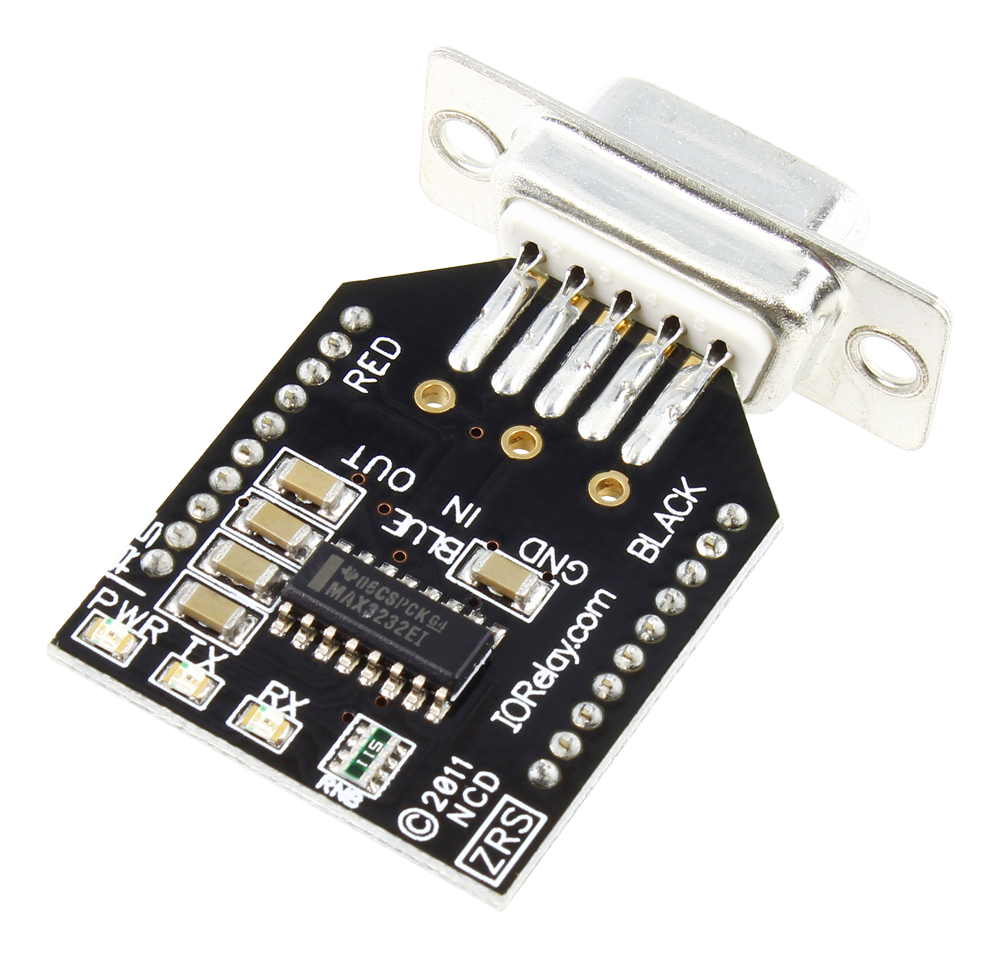
By selecting the RS-232 Relay interface you will be sending commands to the board through either a DB9 or direct wire interface. Boards on this page are equipped with a ZRS communications module that adds RS-232 communications to the board. At checkout you will have three modules to choose from with either a DB9 or direct (3-wire) connection. A command consists of a few bytes of data in numerical format usually between 2 and 6 bytes. Once the command has been received, the controller processes the command and the relay activates.Selecting an RS-232 Relay Board
 Below you will find the 2-channel RS-232 Relay that are available. The difference being the amperage of the relays installed and the type of relay. Choose the controller that fits the amperage you are switching. You will find SPDT relays in the 5, 10 and 20 amp versions and an SPST version in 30 amp. For more information on selecting the correct relay for your application see Choosing a Proper Amperage.