
630VDC / 250VAC Capacitor
DME6P56KF$4.89

Type DME Capacitor
Type DME radial-leaded, mini-dipped capacitors deliver virtually the same performance of other capacitors physically twice as big. Improvements in film technology permit the use of thinner dielectric and make Type DME the choice for all but higher current AC applications where the larger size may be an advantage. Type DME self heals shorts caused by overvoltage transients. For small size and low cost, Type DME is tops.
DME6P56KF Capacitor at a Glance
- Required for Handling Inductive Loads
- Rated for 630VDC / 250VAC
- Motors
- Solenoids
- Transformers - Capacitor Absorbs the High Voltages
- Increase Lifespan of Relay
- Stops Interference of Microprocessor Logic
- Easy to Install
- Use with AC or DC Applications
- Not Required with Resistive Loads
Protect Against Inductive Spikes
Motors, solenoids, contactors and other inductive loads can generate voltage spikes every time they switch on. For just a few dollars, suppression capacitors can help protect relay contacts and extend the life of your control system.
Simple to install and highly recommended for inductive loads, capacitors are one of the easiest ways to improve long-term system reliability.
Induction Suppression
Handling Inductive Loads (Why It Matters)
Inductive loads are anything with a magnetic coil - motors, solenoids, transformers, mag locks, door strikes, etc. These devices generate dangerous voltage spikes when switched on and off.Those spikes can:
- Destroy relay contacts prematurely
- Cause unexpected controller resets
- Knock USB devices offline
- Damage the board's power regulation circuitry
💡 Relay Pros ProTip:
Many customers skip suppression because it seems complicated. In reality, adding a suppression capacitor typically requires only two connection points and can dramatically reduce relay contact wear when switching motors, solenoids and contactors.Why You Need a Capacitor
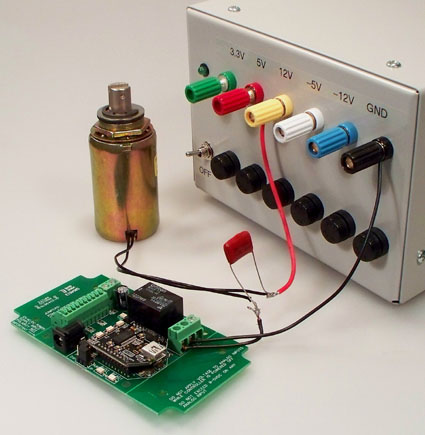 Every time an inductive device switches on, it releases a burst of high-voltage energy.
A suppression capacitor:
- Absorbs these spikes before they reach your relay
- Protects relay contacts from arcing
- Prevents interference with the microcontroller logic
- Helps maintain stable USB or serial communication
Resistive Loads Don't Need Suppression
If you're switching a purely resistive device, such as:- Incandescent/LED lighting
- Heating elements without fans
- Basic resistive appliances
- Using Relay as Dry Contact Output
Choosing the Right Capacitor
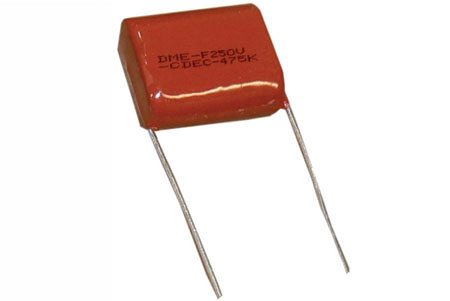 It's simple:
Choose a capacitor with a voltage rating equal to or higher than the voltage of the device you're switching.
Example:
- Switching a 120VAC motor → Use a capacitor rated for 120VAC or higher
- Switching a 24VDC solenoid → Use a capacitor rated for 24VDC or higher
⚠️ Safety Note:
Suppression capacitors can retain a charge for a short period after power is removed. Always discharge capacitors safely before handling.
Suppression capacitors can retain a charge for a short period after power is removed. Always discharge capacitors safely before handling.
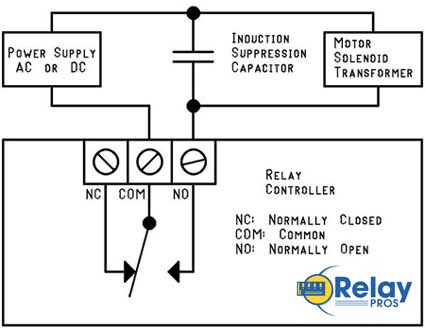
Easy Installation
Installing a suppression capacitor is straightforward:- Mount it as close to the relay as possible
- Connect it in parallel with the inductive load
- Polarity doesn't matter - capacitors used for suppression are not polarized
- Works with both AC and DC loads
Don't Share Power Supplies with Inductive Loads
Your controller must be powered by a clean, regulated power supply.Do not share the same power supply with:
- DC motors
- High-power solenoids
- Any heavy inductive device
The only exception: battery-powered systems (like automotive) where the battery naturally absorbs induction spikes.
Important Note for USB Users
USB is extremely sensitive to electrical noise. An inductive spike can cause the PC's motherboard to drop the USB port entirely.That means:
- Your controller disappears from the OS
- Your application loses communication
- You must unplug and reconnect the board