8-Channel Programmable Potentiometer with USB Interface
ZPOT8PROXR_USB
Resistance Output
The ZPOT8ProXR_USB allows software control of up to 8 digital potentiometers, each with 256 programmable positions. Simply send a command to adjust the wiper position and change the resistance value electronically, eliminating the need for manual adjustment.Each potentiometer includes three connections: A, Wiper, and B. As the wiper moves toward terminal A, the resistance between A and the wiper decreases while the resistance between the wiper and B increases. Moving the wiper toward terminal B produces the opposite effect.
Potentiometer channels may be adjusted individually or multiple channels can be updated simultaneously.
USB Potentiometer
The ZPOT8ProXR_USB combines NCD's programmable digital potentiometer technology with an integrated USB interface for simple computer control. Connect the controller to any available USB port and it automatically appears as a Virtual COM Port, allowing applications to communicate using standard serial commands.Using the POT Command Set, software can adjust up to 256 potentiometer channels with 8-bit resolution when expansion modules are installed. Control resistance values directly from custom software, scripts, test equipment, or NCD's Base Station Software.

USB Potentiometer at a Glance
- 8-Channel Digital Potentiometer
- 256 Tap Positions Per Potentiometer
- Available in 10kΩ, 50kΩ, and 100kΩ Versions
- Up to 1mA Wiper Current Per Channel
- Expandable to 256 Pots Using the UXP Expansion
- Control Relays Using the XR Expansion Port
- 12 Guage Solid Core Wire Capacity
- Operating Temperature: -40°C to +85°C - Onboard USB Interface Module
- Connects Directly to Any USB Port
- Appears as a Virtual COM Port
- Compatible with Custom Software and Serial Commands
- Works with NCD Base Station Software
)
Important: Resistance Output Only
These controllers provide a programmable resistance output, not a programmable voltage output. They are designed for applications operating between 0 and 5VDC with a maximum 1mA wiper current per channel. Exceeding these limits can permanently damage the potentiometer.
Programmable Potentiometer
"Electronic Resistance Control Through Simple Commands"
Digital Potentiomer
Replace manual potentiometer adjustments with software control. NCD's Programmable Digital Potentiometer allows your application to electronically adjust resistance values by simply sending commands from a computer, PLC, microcontroller, or custom software.Each controller provides 8 independent digital potentiometers with 256 programmable tap positions per channel and is available in 10kΩ, 50kΩ, and 100kΩ versions. Individual channels can be adjusted independently or multiple channels can be updated simultaneously using the same simple command set used throughout the ProXR product family.
How It Works
Each potentiometer provides three terminals: A, Wiper, and B.Sending a lower value moves the wiper toward terminal A, decreasing the resistance between A and the wiper while increasing the resistance between he wiper and B.
Sending a higher value moves the wiper toward terminal B, decreasing the resistance between the wiper and B while increasing the resistance between A and the wiper.
The first 32 potentiometer channels can store a programmable startup position, allowing your application to automatically restore critical resistance values after power is applied.
Resistance Output Only
This board provides a programmable resistance output, not a programmable voltage output. It is designed for applications operating between 0 and 5VDC with a maximum 1mA wiper current per channel. Exceeding these limits may permanently damage the potentiometers.Choosing the Right Resistance Value
Digital potentiometers are available in 10kΩ, 50kΩ, and 100kΩ versions. The resistance value you select should match the requirements of the circuit you are replacing or designing.- 10kΩ is the most common choice and works well for many signal conditioning, amplifier, and general-purpose control applications.
- 50kΩ is often selected when a higher resistance range is needed while maintaining moderate current flow.
- 100kΩ is best suited for high-impedance circuits where very little current is required.
💡 Relay Pros ProTip:
If you're selecting a programmable potentiometer to replace a manual potentiometer, simply choose the same resistance value as the component you're replacing.
Software Controlled Resistance
Adjust one potentiometer or every potentiometer with simple serial commands. The POT Command Set provides precise electronic control over resistance values without manual adjustment.Whether controlling a single channel or a fully expanded system, the command structure remains consistent, making it easy to integrate with custom software, automation systems, PLCs, and NCD Base Station Software.
Expand as Your Application Grows
Built on NCD's proven ProXR platform, the controller is designed to grow with your application.The integrated UXP Expansion Port supports expansion up to 256 programmable potentiometers, while the XR Expansion Port allows NCD relay expansion boards to be added to the same system. This makes it possible to combine programmable resistance control and relay control using a single controller architecture.
The ProXR Command Set
Simple Serial Commands. Serious Control.
The ProXR family of controllers is driven by a powerful, low-level serial command set. You send a short numeric or Hex command to the board - and the board responds immediately.This design keeps your software fast, reliable, and easy to integrate into almost any platform, from small scripts to full automation systems.
How to Send Commands
 All ProXR controllers operate using a small sequence of bytes sent over a serial connection.
You can send commands as:
- Decimal byte values
- Hex byte values
What a Command Looks Like
This command will set a single Potentiometer to a specified value where POT is the channel number and value is the new value of the potentiometer:254 170 0-255(Channel Number) 0-255(Value) - Set specific POTs value
0xFE 0xAA 0x00-0xFF 0x00-0xFF - If you require Hex
The controller processes the command and returns a confirmation byte 85 (0x55 Hex) when the operation completes.
Base Station Compatible
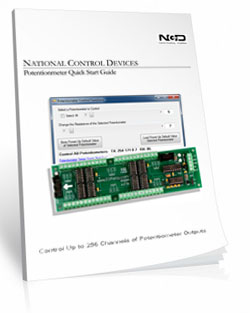
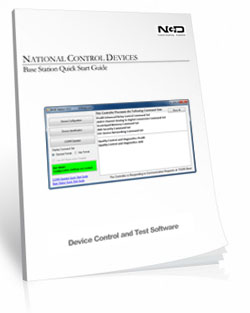
NCD's Base Station Software provides a simple point-and-click interface for learning the command structure, testing communications, and controlling potentiometer outputs before writing software.It is an excellent development tool for evaluating hardware and generating the commands used in your own applications.
💡 Relay Pros Pro Tip:
Let Base Station Show You the Command! Base Station software can show you the exact command being sent to the controller. When you control the potentiometers using the point-and-click interface - Base Station displays the actual command being transmitted to the board.
This is extremely useful for programmers. You can perform the function you want in your application and instantly see the decimal or hexadecimal command - the same command you'll use in your programming.
5-Yeary Warranty & Guarantee
Every potentiometer is covered by:- 5-Year Functional Warranty
- 30-Day Money-Back Guarantee
Essential Power Requirements
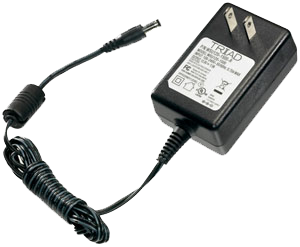 Clean, regulated power is critical.
A stable 12VDC supply ensures both the inputs and onboard firmware operate correctly. Unstable or noisy power can cause improper reading or communication issues.
We recommend the PWR12-US (120VAC → 12VDC @ 1.25A) or our international supply with interchangeable adapters.
Learn More
Shipping
All boards ship directly from our Missouri facility. Each unit is built and tested at the time of order - please allow 3 - 5 days for production. We ship primarily through UPS, but we're happy to use FedEx or DHL for international orders when you provide your account number. Questions? Call us at 800-960-4287 or email sales@relaypros.com.Reliable USB Control
Send ProXR commands directly to your controller through your computer's USB port. The USB interface appears as a standard Virtual COM Port, providing simple, reliable communication with broad software and operating-system compatibility.
USB Interface
The USB interface provides a direct connection between your computer and the NCD controller, allowing your software to send commands directly to the board. Send commands from your software through the USB port, and the USB interface module delivers those commands directly to the controller.The ProXR Command Set handles the actual control. USB simply provides the connection that gets those commands to the board.
Sending Commands
Your software sends a ProXR command through your computer's USB port. The USB interface module receives the command and passes it to the controller, where the command is processed and the requested action is performed.Computer → USB Port → USB Interface Module → ProXR Controller → Relay
Most ProXR commands are compact serial commands, typically just 2 - 6 bytes. After processing a command, the controller can return ASCII code 85 to confirm successful completion.
Simple Serial Commands. Serious Control.
The ProXR family of controllers is driven by a powerful, low-level serial command set. You send a short numeric or Hex command to the board - and the board responds immediately.This design keeps your software fast, reliable, and easy to integrate into almost any platform, from small scripts to full automation systems.
All ProXR controllers operate using a small sequence of bytes sent over a serial connection.
You can send commands as:
- Decimal byte values
- Hex byte values
Look for the ProXR Command Set tab for more.
USB Communication
Virtual COM Port
The USB interface appears to your computer as a standard Virtual COM Port (VCP). This allows the controller to communicate using the same serial-port methods supported by a wide range of programming languages, software, and operating systems.On Windows computers with internet access, the required FTDI drivers typically install automatically when the USB module is connected. The USB module uses a genuine FTDI FT232-RL USB-to-Serial converter for reliable USB communication and broad software compatibility. Drivers are also available for Windows, macOS, Linux, and other operating systems here: FTDI Driver Download.
USB Communication Module
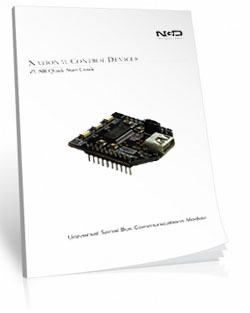
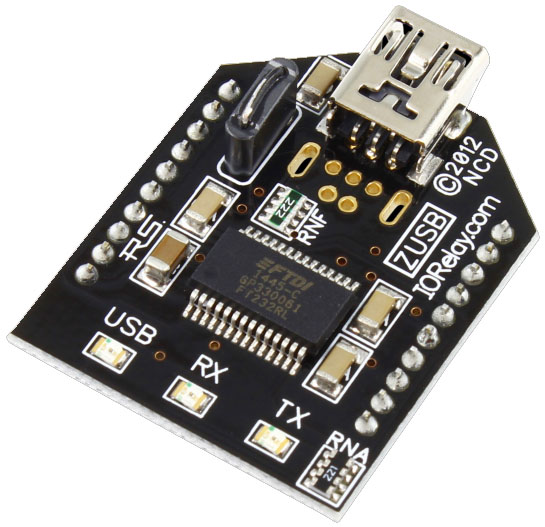 Connect the module to an available USB port, open the assigned COM port at 115.2K baud, and begin communicating with the controller. On-board USB, TX, and RX LEDs provide immediate visual feedback during communication.
The module uses a durable USB Mini connector designed for long-term reliability.
For quick testing and configuration, download and install the latest Base Station Software on a Windows PC. The software automatically detects the available COM port and provides a convenient way to communicate with the controller.
Handling Inductive Loads
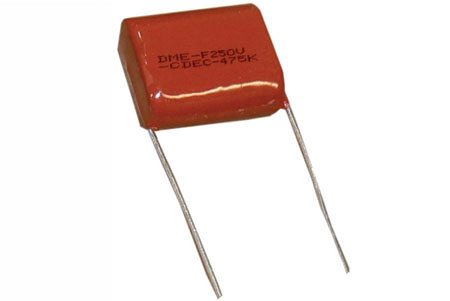 For most applications, installing capacitors provide sufficient electrical noise suppression for reliable communication.
Switching highly inductive loads such as motors can generate significantly higher levels of electrical noise. Motor-control applications should be tested to ensure reliable communication in the installed environment.
If additional noise immunity is required, an RS-232 communication module provides a more noise-resistant communication path. When USB connectivity is still required, a USB-to-RS-232 adapter can be used with the RS-232 module.
For typical relay applications and non-motor loads, standard USB communication generally provides reliable operation.
Look for the Induction Tab for more.
USB Relay Videos
ProXR Expansion Board
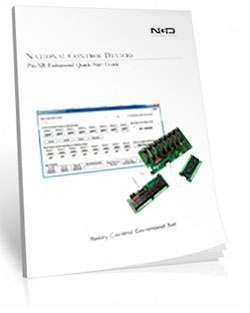
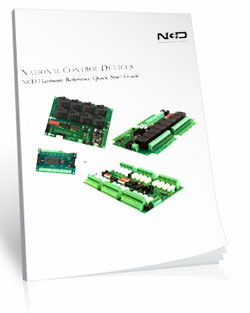
Expansion Boards plug into the XR Expansion Port on any ProXR, Taralist or Potentiometer Board to add more relays. Expansion boards can be daisy chained together to add up to 256 relays as needed.
The XR Expansion Port
"Running out of relays? Just plug in more!"
Add Relays as Your Needs Grow
ProXR Controllers were built with relay expansion in mind. The XR Expansion Port lets you add banks of external relays to any ProXR or Taralist board equipped with an XR Expansion port. Expansion boards can be added at any time as your system grows, up to a maximum of 256 total relays.As expansion boards are added, additional relay banks become available automatically. Simply add another expansion board whenever you need more relays.
Relay Banks - How Large Systems Stay Simple
 ProXR and ProXR Lite controllers organize relays into groups of eight called banks.
Each bank contains:
- Relay 1 through Relay 8
For example:
- An 8-relay controller uses one bank
- A 32-relay controller uses four banks
- A 64-relay setup uses eight banks
- Select a bank
- Send simple relay commands within that bank
Linking XR Expansion Boards Together
XR Expansion Boards include both an XR Input and XR Output connector. Connect the XR Output on your ProXR controller to the XR Input on the first expansion board. To add more relays, connect the XR Output of one expansion board to the XR Input of the next board in the chain.You can mix and match different relay types on expansion boards to match your application. A 6" expansion cable is included with each expansion board.
For best reliability, keep all expansion cabling as short as possible. Maximum expansion length and total relay count depend on your installation, electrical noise, and overall cable length. For best compatibility, the combined length of the controller, expansion boards, and cables should not exceed 1-2 meters.
Mix & Match
Expansion boards do not need to match the relay type or amperage of the main controller or other expansion boards. Mix and match expansion boards to get the exact relay types and current ratings your application requires.💡 Relay Pros Pro Tip:
You can mix and match relay types and amperages to dial in exactly what your application requires - for example, adding a bank of DPDT relays when all the other boards have SPDT relays. This gives you ultimate flexibility as your system grows.
Will Not Operate Independently
This Expansion Board gets it's commands from the main ProXR, Taralist or Potentiometer board and will not operate independently. This board MUST be plugged into a ProXR or Taralist board to operate and will not function on it's own.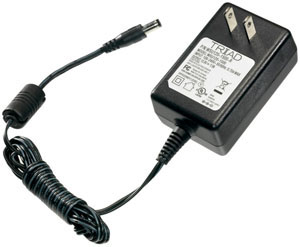
Essential Power Requirements
All XR expansion boards require their own 12 VDC power source. A regulated 12 VDC supply must be connected directly to each expansion board for proper operation.We offer a compatible wall-plug power supply at checkout, or you may use your own regulated 12 VDC supply. Learn More
Maximum Relay Rating Notes
ProXR is capable of expanding to an absolute maximum of 256 Relays. In some cases, it may not be possible to control all 256 relays, particularly in applications where high noise levels may be involved. Experimentation may be required, as it is not possible for us to guarantee all users will be able to utilize all 256 relays in every application. Noise tends to accumulate when several expansions are connected together. For best results, the XR expansion cables must be as short as possible.
RoHS Compliant
Expansion boards are led free and RoHS Compliant. If your requirements are for RoHS compliant parts every expansion board is manufactured with RoHS compliant led free parts and solder.2-Million Cycles
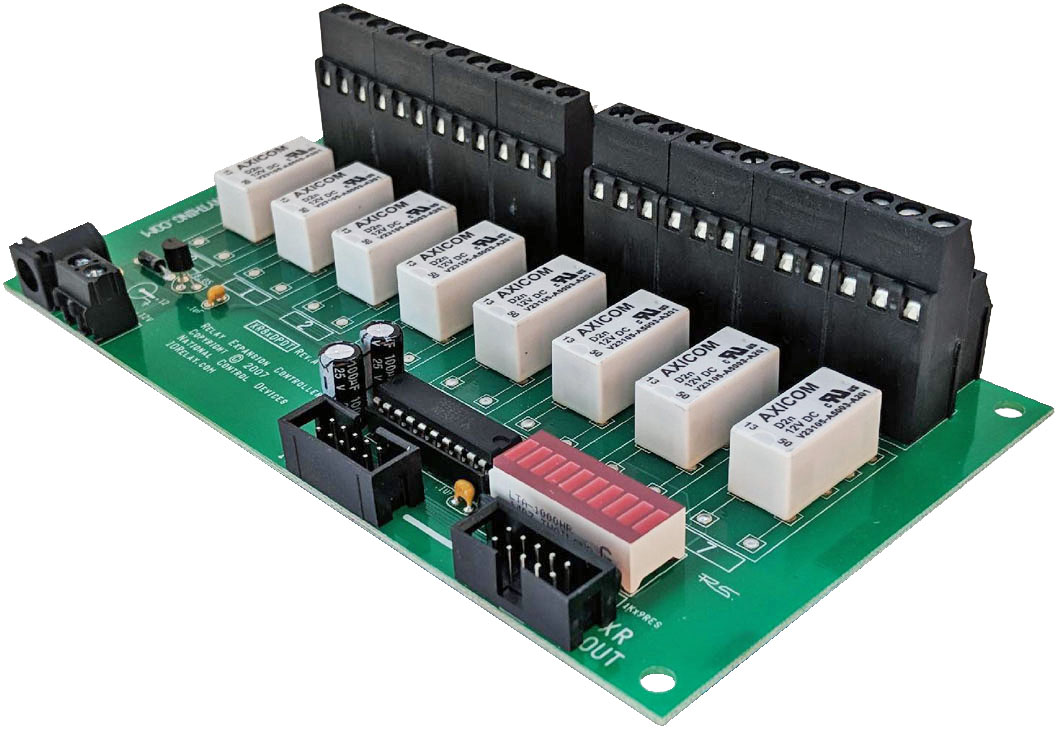 XR Expansion Boards are designed for long life just as the ProXR boards, you should expect to get years of service from expansion board and literally 2-million cycles from the relays on board. With a 5-year warranty and a money back guarantee add more relays anytime the need arises!
 Relay Expansion Videos
Accessories
Power Supply Available
 Reliable Power Means
Reliable Switching
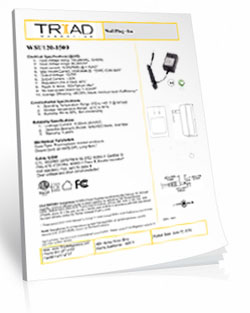
The PWR12 is regulated power supply providing clean power necessary for the performance of these boards. The PWR12 US power supply is a 120VAC to 12VDC 1.25A 60Hz regulated power supply and it plugs into the barrel connector on the board. The output connector is a 2.1mm I.D. x 5.5mm O.D. x 9.5mm R/A barrel connector.