Long Range Wireless Relay 1-Channel 20-Amp ProXR Lite
R120PL_XSC
900 MHz Wireless Relay
This ProXR Lite wireless relay controller allows you to control your relay over a long-range 900 MHz radio link with a line-of-sight range of up to 2 miles. The board communicates wirelessly with your computer through an external USB modem, appearing as a standard virtual COM port for simple software integration.Wireless range depends on antenna placement and environmental conditions. Best performance is achieved when the antennas have a clear line of sight. Detailed modem information and configuration is available in the 900MHz Interface tab.
The ProXR Command Set
The R120PL_XSC uses the ProXR Command Set for simple yet powerful control. Send basic commands to turn relays on or off, or take advantage of advanced features like delays, flashers, duration timers, and full relay-status feedback. From quick automation scripts to full system integrations, ProXR commands deliver a proven, reliable command set trusted across the industry.This model is part of the ProXR Lite series and is designed for applications that require reliable wireless relay control in a compact, non-expandable board.

- OVERVIEW
- 900MHz Interface
- Board Features
- ProXR Command Set
- AD8 Command Set
- Power & More
- N-Button Lite
- Base Station
- Software
- Induction
- ACCESSORIES
- Data Sheets
Wireless Relay at a Glance
- 1 20-Amp Relay Installed
- Single Pole Double Throw (SPDT) Relay
- Normally Open 20-amps, Normally Closed 10-amps
- Wire Using 1/4" Quick Disconnect Terminal
- Temperature Rating -40° C to 85° C
- Not-Expandable - Onboard 900MHz Wireless Interface
- Reliable 2-Mile Standard Module
- Requires 900MHz Modem
- Modem Mounts as a Virtual COM Port
- For Use in North America (US, Canada, Mexico) - Industry-Leading ProXR Command Set
- Program in Nearly Any Language
- Send Precise Relay Commands
- Toggle, Flash, and Timing Control - ProXR AD8 Command Set (Input Support)
- Read 0-5V Sensors
- Monitor External Sensors or Contact Closure
- Use Inputs to Trigger Relays
)
Wireless Range & Line-of-Sight
900 MHz boards operate most reliably when the antennas can see each other.
Obstructions such as walls, buildings, trees, terrain, and especially metal can significantly
reduce range or prevent communication altogether. Metal is the most difficult material for
wireless signals to penetrate, with stone and brick close behind.
Positioning both antennas for clear line-of-sight operation will dramatically improve
range and long-term reliability.
Wireless Relay Control
"Digi XBee-PRO 900HP - Best-In-Class Range RF Module"
Long Range Wireless Industrial Mesh
These controllers use Digi XBee-PRO 900HP mesh networking module to move data between devices when direct point-to-point communication is not possible.Each device can automatically relay messages for other devices, allowing data to "hop" across multiple nodes until it reaches the destination. No custom routing is required - devices only need to remain within wireless range of at least one neighboring node.
With typical installations, modules support up to 2 miles of line-of-sight range per hop and up to 8 hops across a mesh network. High-gain antennas can extend point-to-point links significantly under ideal outdoor line-of-sight conditions.
Long Range Wireless
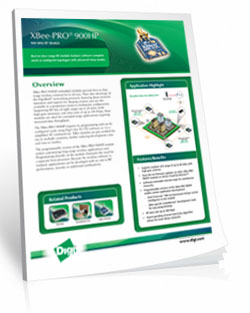
These boards use an embedded XBee-PRO 900HP 900 MHz radio module and communicate through a USB-connected 900 MHz modem on your computer.The modem appears as a standard virtual COM port. You simply send normal ProXR commands to the COM port and the modem forwards them wirelessly to one or more controllers.
This interface supports both point-to-point links and multi-device networks.
💡 Relay Pros Pro Tip:
It worked on my bench... why not through two buildings and a metal wall??
Wireless range is always based on clear line-of-sight between the antennas. While these 900 MHz radios are capable of up to 2-mile line-of-sight range, walls, buildings,
metal structures, and equipment can dramatically reduce usable distance.
The good news is that in many real-world installations you can often find a reliable
"sweet spot" by using antenna extension cables to relocate one or both antennas.
Raising the antenna or moving it to a location where the radios can better "see" each other
will usually make the difference between an unreliable link and a solid connection.
XBee-PRO 900HP RF Module
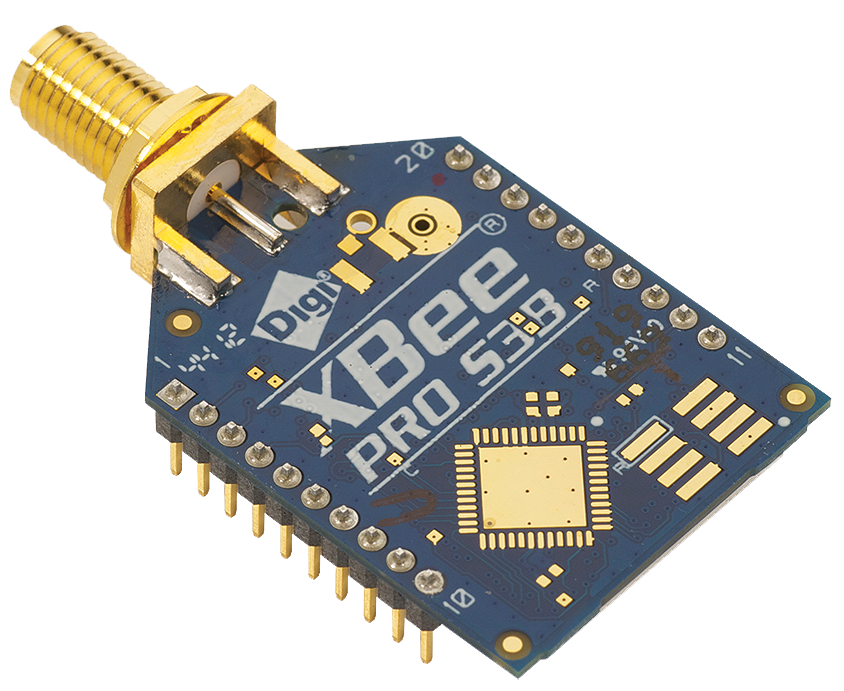 This board is equipped with an XBee-PRO 900HP 900 MHz radio module designed for low-latency,
point-to-multipoint and mesh networking applications.
This board is equipped with an XBee-PRO 900HP 900 MHz radio module designed for low-latency,
point-to-multipoint and mesh networking applications.
The module supports point-to-point, peer-to-peer, and multi-node mesh operation and provides high transmit power for long-range line-of-sight installations.
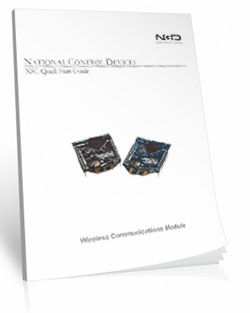
900MHz Wireless Modem (required for PC-to-radio use)
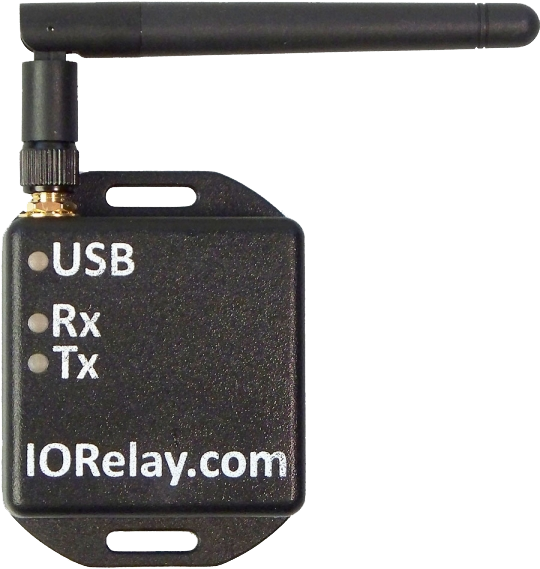 Not required when integrating into an existing XBee-PRO 900HP mesh network. A 900 MHz USB modem is required to communicate with this controller from a computer
unless the controller is being integrated into an existing 900 MHz XSC mesh network.
Not required when integrating into an existing XBee-PRO 900HP mesh network. A 900 MHz USB modem is required to communicate with this controller from a computer
unless the controller is being integrated into an existing 900 MHz XSC mesh network.
Plug the 900HP-S3B (long-range) modem into the USB port of your computer. The modem appears as a virtual COM port and forwards ProXR commands wirelessly to one or more XSC-compatible controllers.
The modem is available at checkout.
XSC Modem
Communicate with the wireless controller exactly the same way you would communicate with a USB-connected device
💡 Relay Pros Pro Tip:
Getting unreliable wireless performance in high-interference areas?
Large crowds, cell phones, and nearby radio systems can reduce range and reliability. In one installation at a racetrack, we improved signal performance by placing a simple reflector behind the antenna - just a small bowl lined with aluminum foil - aimed toward the transmitting device.
This creates a basic directional "dish" that helps focus the signal toward the receiver. It's a quick, low-cost way to improve reliability when you can maintain line-of-sight between devices.
Regional Compliance
This product contains a Digi XB900HP radio module and is approved for use in the United States, Canada, and other supported regions when configured correctly.Certain regions (including Singapore and others) may require additional certification or licensing depending on your application and deployment.
Canada: Contains IC: 1846A-XB900HP. This device complies with ISED license-exempt RSS standards. Operation is subject to standard conditions.
International customers are responsible for verifying local regulatory and licensing requirements prior to deployment.
900 MHz Relay Videos
Simple, Reliable Relay Control
ProXR Lite boards are built for dependable, no-nonsense relay control. You get industrial-grade hardware, the full ProXR command set, built-in analog inputs, and long relay life - without expansion complexity or unnecessary
The ProXR Lite SPDT 20-Amp Relay Board
"Built for Reliability. Engineered for Simplicity"
ProXR Lite Relay Design
The ProXR Lite series is machine-manufactured for consistent, high-precision performance. Every controller is fully tested before it leaves the production floor, ensuring dependable operation in tough environments - heat, cold, vibration, and everything in between. With thousands of units in the field worldwide, these boards have proven they can take a beating and keep on switching.ProXR Command Set
 ProXR Firmware is one of the most feature-rich relay command sets available.
You get access to a huge library of functions, timers, parameters, and control options - all programmable in nearly any language. Prefer no-code? Software is available, too.
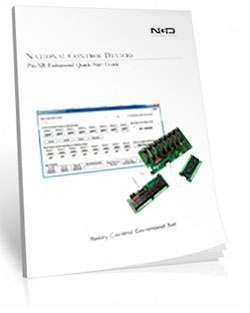
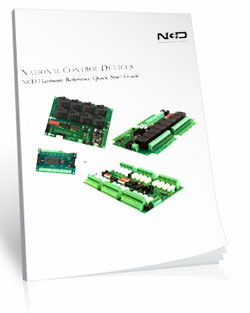
Find the full command set in the ProXR Enhanced Quick Start Guide.
Easy Software Development
Most customers write their own control programs, and the ProXR Lite makes that easy.Because the board uses the Serial Port Profile, it mounts as a virtual COM port, allowing simple command-based control from nearly any programming language.
Not a programmer? N-Button Lite offers point-and-click relay control and status monitoring - no code required. Look for the Gray N-Button Lite tab.
The Input Side
"Where the board gathers information."
Read Analog Sensors
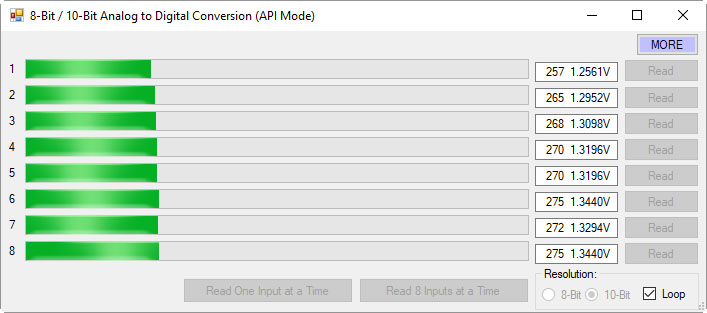 Every ProXR Lite board includes an 8-Channel 8/10-Bit A/D Converter.
Monitor up to eight sensors from 0 - 5VDC (0V can be read from a simple contact closure). Use A/D inputs for:
- Switch status monitoring
- Variable resistance sensors
- Simple automation logic
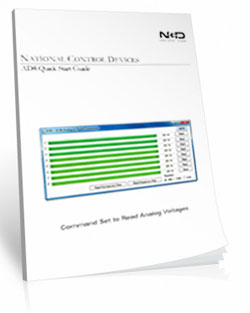
See the AD8 Quick Start Guide for full A/D command documentation.
Relay Activator and Analog Inputs
The Relay Activator control panel lets you use analog inputs to directly control onboard relays. Connect a button or switch to an analog input and assign it a relay control function. Each of the eight inputs can be assigned one of eight functions:- Turn relays ON or OFF
- Toggle relay states
- Flash a relay momentarily
- Toggle the flash function
- Turn all relays ON
- Turn all relays OFF
- Generate push-notification events using N-Button Software
Relay Pros ProTip
Automatic + Manual ControlNeed both automatic and manual control?
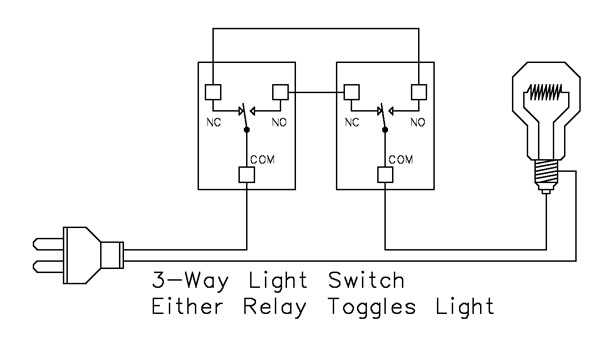
Control the relay using your computer as usual, then connect a standard wall switch to one of the A/D inputs. Using the 3-Way Relay Logic wiring example, the input can be used to control the relay while the computer continues to provide automatic control.
The wall switch does not connect directly to the relay. The switch signals the ProXR firmware through an A/D input, and the 3-Way wiring allows either control method to turn the load ON or OFF.
It's a simple way to combine computer-controlled operation with convenient local control, giving you the best of both worlds.
The Output Side
"Where the board controls your equipment."
SPDT Relay Installed
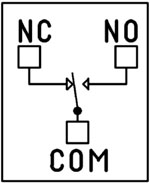 This board is equipped with an SPDT (Single Pole, Double Throw) relay, giving you three connection points: Common (COM), Normally Open (NO), and Normally Closed (NC).
- When the relay is off, COM is connected to NC
- When the relay is energized, COM switches over to NO
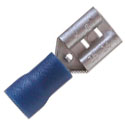
The Common (COM) terminal is the moving contact inside the relay. When the coil energizes, it physically swings from NC to NO. Wiring is done directly to the relay using standard 1/4" quick-disconnect terminals. (Shown at right.)
Amperage Rating
The installed relay is rated for 20 amps on the Normally Open (NO) contact and 10 amps on the Normally Closed (NC) contact.⚠️ Best Practice:
For high-current loads, always use the Normally Open (NO) contact.
The Normally Closed (NC) contact is limited to 10 amps and should only be used for lower-current applications.
2 Million+ Cycles
ProXR relays are built for longevity - expect years of reliable operation and millions of mechanical cycles. Every board ships with a 5-year warranty and 30-day money-back guarantee.Not Expandable (By Design)
ProXR Lite keeps things simple.Unlike the full ProXR Series, Lite boards do not support relay expansion. While the firmware still reports up to 256 potential relays, only the first 1, 2, 4, or 8 relays in Bank 1 are active depending on the model you choose.
💡 Relay Pros ProTip:
ProXR Lite boards are perfect when you only need a few relays and don't plan to expand later. You still get the full ProXR command set - just in a simpler, cost-effective package.
Board Features
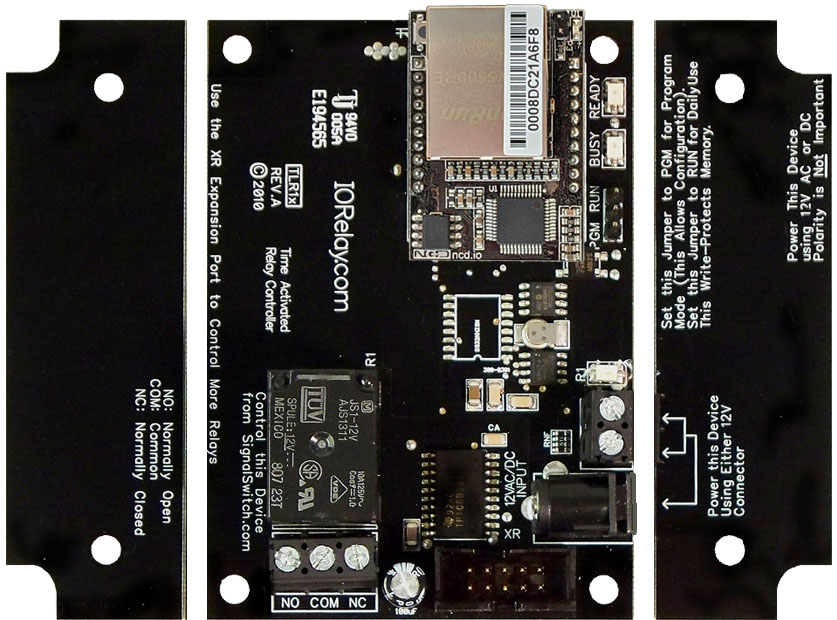
"What sets ProXR apart."
Break-A-Way Tabs for a Smaller Design
Need a smaller footprint? The ProXR Lite PCB includes Break-A-Way Tabs, allowing the board to fit into optional undrilled enclosures or tight-space installations.
RoHS Compliant & Lead-Free
All ProXR Lite controllers are built with RoHS-compliant components and lead-free solder.Power & Protection
"Reliable Power = Reliable Switching"
Essential Power Requirements
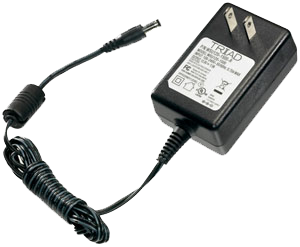 Clean, regulated power is critical.
A stable 12VDC supply ensures both the relay coils and onboard firmware operate correctly. Unstable or noisy power can cause improper switching or communication issues.
We recommend the PWR12-US (120VAC → 12VDC @ 1.25A) or our international supply with interchangeable adapters.
Learn More
Induction Suppression
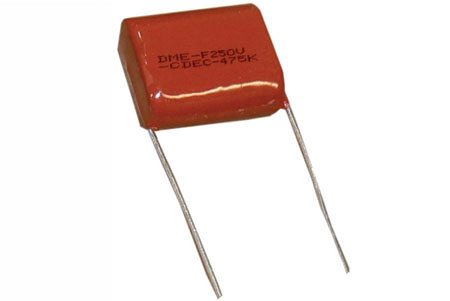 One of the most important parts of relay control - yet the most commonly overlooked - is inductive load protection.
Anything with a magnetic coil (motors, solenoids, transformers, etc.) generates high-voltage "kickback" when switched. Without a suppression capacitor, that spike can:
- Shorten relay lifespan
- Cause electrical noise that disrupts the microcontroller
- Trigger unexpected shutdowns
- Require power cycling to restore communication
Support & Ownership
"5-year warranty & no monthly subscriptions."
5-Year Warranty & Guarantee
Every ProXR Lite controller is covered by:- 5-Year Functional Warranty
- 30-Day Money-Back Guarantee
- No Monthly Subscriptions
Shipping
All boards ship directly from our Missouri facility. Each unit is built and tested at the time of order - please allow 3 - 5 days for production. We ship primarily through UPS, but we're happy to use FedEx or DHL for international orders when you provide your account number. Questions? Call us at 800-960-4287 or email sales@relaypros.com.Base Station Software
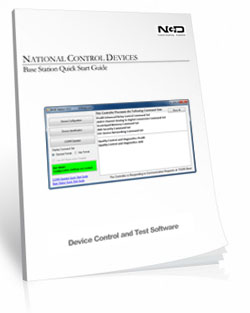
Base Station is the fastest way to learn and control the ProXR Lite board. Explore every feature through an intuitive GUI while watching live data flow to and from the board.Designed to work seamlessly with the entire family of communication modules, Base Station supports every feature the board offers - far beyond what other manufacturers provide. More on Base Station can be found in the Base Station tab.
Powerful Control, Any Language
The ProXR Command Set gives you precise, reliable control using simple serial commands - compatible with nearly any programming language. Use it directly in your own software or explore every feature using free configuration tools.
The ProXR Command Set
"The industry's most powerful relay command set"
Simple Serial Commands. Serious Control.
The ProXR family of controllers is driven by a powerful, low-level serial command set. You send a short numeric or Hex command to the board - and the board responds immediately.This design keeps your software fast, reliable, and easy to integrate into almost any platform, from small scripts to full automation systems.
How to Send Commands
 All ProXR controllers operate using a small sequence of bytes sent over a serial connection.
You can send commands as:
- Decimal byte values
- Hex byte values
What a Command Looks Like
At its simplest, a relay command is only three bytes:254 108 1 - Turn ON relay 1 in bank 1
0xFE 0x6C 0x01 - If you require Hex
254 100 1 - Turn OFF relay 1 in bank 1
0xFE 0x64 0x01 - If you require Hex
The controller processes the command and returns a confirmation byte 85 (0x55 Hex) when the operation completes.
💡 Relay Pros ProTip:
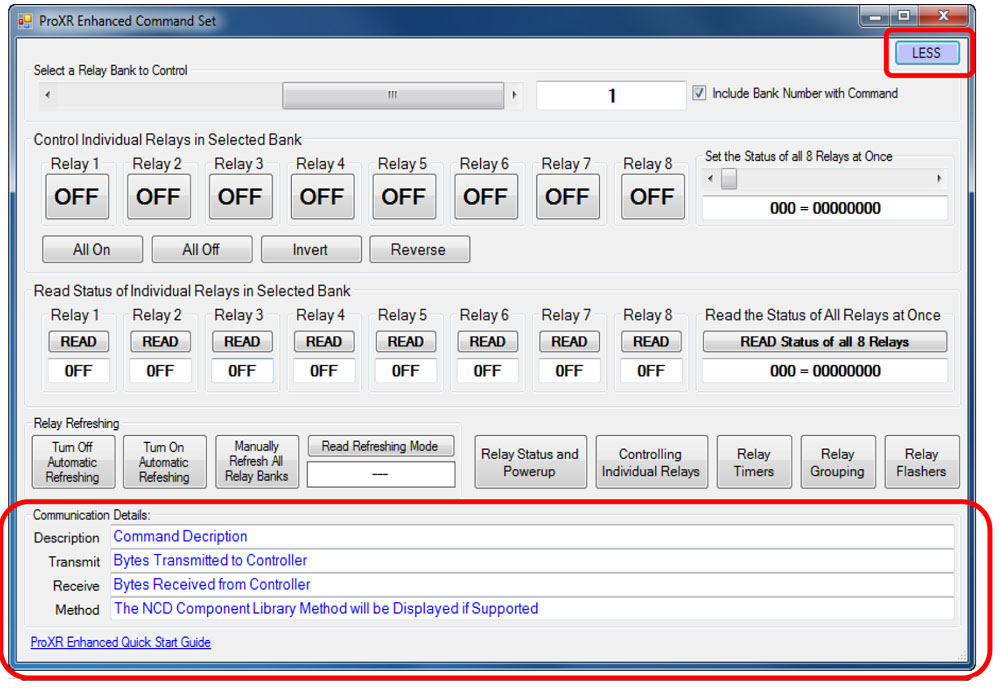
Let Base Station Show You the Command! Base Station software can show you the exact command being sent to the controller. Click the More button in the upper-right corner of the Base Station window to expand the interface and display the command output. When you control relays using the point-and-click interface - turning relays on or off, toggling outputs, or using timing and flasher functions - Base Station displays the actual command being transmitted to the board.
This is extremely useful for programmers. You can perform the function you want in your application and instantly see the decimal or hexadecimal command - the same command you'll use in your programming.
Relay Banks - How Large Systems Stay Simple
ProXR and ProXR Lite controllers organize relays into groups of eight called banks.Each bank contains:
- Relay 1 through Relay 8
Expandable ProXR boards use the same bank structure, but can add additional banks using XR expansion boards as your system grows.
For example:
- An 8-relay controller uses one bank
- A 32-relay controller uses four banks
- A 64-relay setup uses eight banks
- Select a bank
- Send simple relay commands within that bank
Two Ways to Address Relays
You can control relays in two different (and complementary) ways:- Current Bank Commands - select a bank once, then issue fast relay commands
- Bank-Directed Commands - specify the bank directly inside the command
For larger installations, bank-directed commands make software logic easier and more robust.
What You Can Do With the ProXR Command Set
The ProXR command set is designed to support real automation projects - not just basic relay switching.Common operations include:
- Turn individual relays on or off
- Turn multiple relays on or off in a single command
- Read the on/off status of any relay
- Control relays by bank for large systems
- Read analog sensor values (A/D inputs)
- Assign and control internal timers
- Trigger relay pulses and timed operations
- Use onboard logic features such as the Relay Activator system
Designed for Any Programming Language
Because the ProXR command set is pure byte-based serial communication, you can use it from:- Python, C#, C++, Java, Node, LabVIEW, and PLC environments
- Embedded controllers and microcontrollers
- Industrial automation and building control systems
No-Code and Learning Tools
If you do not want to write software immediately, free tools are available:- Base Station Software - explore every command, watch live data, and test automation logic
- N-Button Software - create buttons and automation actions without writing code
Full Command Reference
This page is intended as a high-level overview of how the ProXR command system works. For the complete command reference, including all relay, bank, timer, and analog input commands, download the official guide:ProXR Enhanced Quick Start Guide
Relay Grouping - Switch Multiple Relays at the Exact Same Time
Control Neighboring Relays
Relay Grouping lets you control multiple neighboring relays as one logical output.Think of it like building your own multi-pole relay:
- 2 relays → act like a DPDT
- 3 relays → act like a 3PDT
- ...
- up to 8 relays at once in the same bank
How it Works
Relay Grouping adds one extra value to a normal relay command called the Neighbor parameter.The Neighbor value simply means: "Also apply this same command to the next 1-7 relays."
So instead of turning on just one relay...
you turn on that relay plus its neighbors in one shot.
Neighbors must stay inside the same relay bank
For example:- Relay 1 can have up to 7 neighbors
- Relay 8 has no neighbors, because the next relay is in the next bank
💡 Relay Pros ProTip:
Relay Grouping is perfect when you need multiple contacts to move together but still want the flexibility of individual relays also. Instead of hunting for odd multi-pole relay hardware, you can build exactly the behavior you need in firmware.
And if your design changes later? You're not locked into a special relay block.
Prevent Overlapping Relay States
Safe Break-Before-Relay Switching
Some applications require more than simply turning a relay on or off. When controlling motors, actuators, gates, shades, and door systems, it's critical that two opposing relays are never active at the same time.The ProXR firmware includes a built-in Break-Before-Relay command that:
- Turns all relays off
- Waits a short, controlled delay
- Then turns only the selected relay on
Break-Before-Relay Command Example
This example performs a safe switch operation and then activates the selected relay.Decimal: 254 46 0 0
Hex: 0xFE 0x2E 0x00 0x00
When the operation completes, the controller returns: 85 (0x55)
💡 Relay Pros ProTip:
This command is a game-changer for motor control. Use it for gate operators, door controllers, window shades, linear actuators, and any system that uses one relay for "forward" and another for "reverse". By forcing all relays off before energizing the next relay, you protect the motor from being driven in two directions at the same time - a common cause of overheating and motor failure.
This safety behavior is handled entirely inside the ProXR firmware, so your software does not need to manage timing or relay interlocks.
Relay Timers
Relay Timers - Built-In Time Control
ProXR controllers include 16 built-in relay timers that let you turn a relay on for a specific amount of time - without your software having to turn it back off.This is perfect for applications such as:
- Door strikes and mag-locks ("buzz someone in")
- Key-card and access control systems
- Gate and barrier controllers
- Lighting and automation events
Two Simple Timer Modes
ProXR relay timers support two easy-to-use modes:- Duration - turns a relay ON for a specified time, then turns it OFF automatically
- Pulse - waits for the timer to expire, then briefly activates a relay
Simple Duration Timer (Most Common Use)
A duration timer turns a relay ON, holds it ON for the programmed time, and then turns it OFF automatically.You can program:
- Hours
- Minutes
- Seconds
Duration Timer Command Example
Send Bytes (Decimal): 254 50 50 0 0 5 0Send Bytes (Hex): 0xFE 0x32 0x32 0x00 0x00 0x05 0x00
This example activates a relay for 5 seconds, then turns it off automatically.
When the command completes, the controller returns: 85 (0x55)
💡 Relay Pros ProTip:
Relay timers are ideal for door strikes and access control. Instead of having your software turn the relay off, simply send a duration timer for 2-10 seconds. The relay releases the lock, lets the person through, and automatically re-locks the door - even if your software is busy or momentarily disconnected.
Timing is handled inside the ProXR firmware, so your application only needs to send a single command to perform the entire operation.
Note: ProXR controllers do not include a real-time clock. Timers are intended for event-based timing (such as opening a door for a few seconds), not for scheduled calendar-based automation.
Relay Flashers
Relay Flashers - Built-In Blinking and Pulse Control
ProXR controllers include a powerful background relay flasher engine. Once a relay is assigned to a flasher, the firmware automatically turns that relay on and off for you - no software timing loops required.This is ideal for:
- Status indicators and stack lights
- Warning beacons and alarms
- Heartbeat and activity indicators
- Simple pulse or attention signals
Set the Flash Rate (All Flashers)
You can set the flash speed for all active relay flashers with a single command. The speed parameter ranges from 0-255, where:- 0 = fastest flash rate
- 255 = slowest flash rate
Decimal: 254 45 0 128
Hex: 0xFE 0x2D 0x00 0x80
When the command is accepted, the controller returns: 85 (0x55)
💡 Relay Pros ProTip:
Flashers are perfect for visual feedback. For example, use a flashing relay to indicate "system running", "waiting for input", or "fault detected" - while your main software continues doing real work.
Flasher commands can also be combined with relay timers and other ProXR features inside Base Station, making it easy to build pulse, blink, and notification behavior without writing custom timing code.
Base Station Software
Device Command Sets
 Base Station asks the controller which command sets it supports, then displays them when the software launches. Some devices show more command sets, others fewer - it's always based on the board.
ProXR users can access the entire ProXR Command Set to turn relays on/off and run every available function.
Control All ProXR Functions
Turn relays on or off, read relay status, monitor inputs - Base Station gives full ProXR control through a clean point-and-click interface.For programmers, Base Station also shows every command being sent to the board, making it a great tool for learning and development.
Useful Features
There are some useful features to look for when using Base Station Software to control, test, or configure your device:- Links to Quick Start Guides and documentation
- Discovery of network devices with IP address display
- Command Set Window for viewing raw commands (especially helpful for ProXR users)
- Relay Activator with Analog Inputs
Turn Sensors into Actions
Built-in analog inputs let you read switches and 0-5V sensors in real time - and automatically trigger relays, alerts, or automation rules. Monitor data, control outputs, or send notifications using software tools, with no extra hardware required.
The AD8 Command Set
"This isn't just a relay board - it's a control system."
Reading Switches/Variable Resistance Signals
This controller includes eight channels of 8/10-bit Analog-to-Digital Converters capable of reading 0 - 5V DC signals. The ADCs allow you to monitor external sensors or detect contact-closure inputs. Connect temperature sensors, light sensors, current sensors, buttons, switches, or any device that outputs a 0 - 5V signal or simple contact closure.
- With 8-bit resolution, inputs convert 0 - 5V into values from 0 to 255
- With 10-bit resolution, values range from 0 to 1023
A/D Inputs
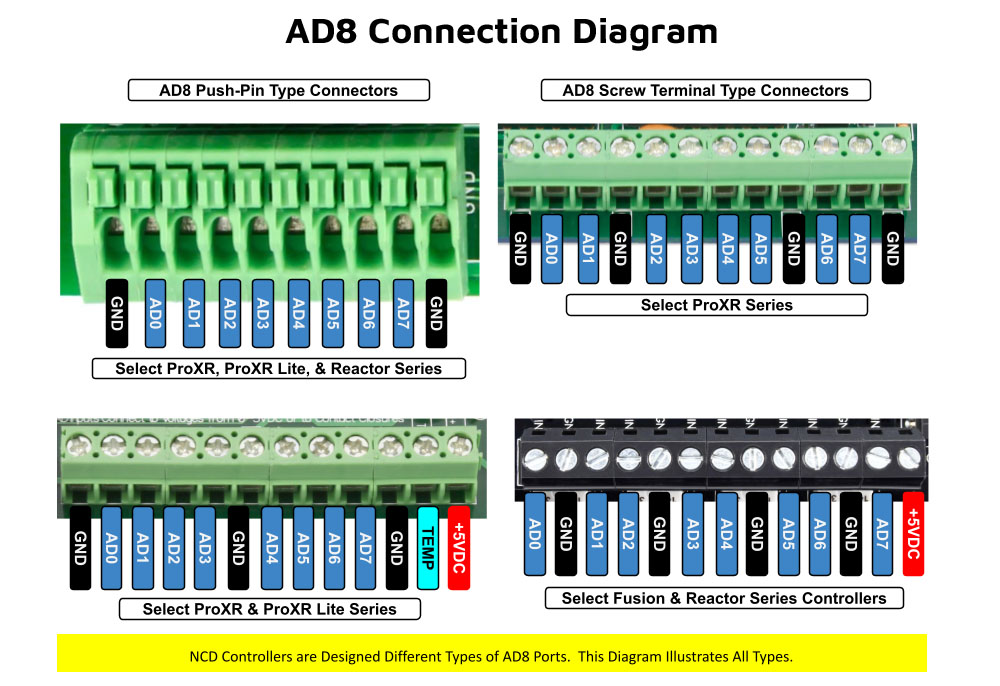 All ProXR Lite boards and ProXR boards that begin with ZADR or ZADSR include an onboard 8-channel Analog-to-Digital converter in addition to relay control. Each channel accepts a 0-5V DC input and converts it into a numeric value for processing.
Using the AD8 Command Set, analog voltages are translated into digital values (8- or 10-bit resolution, depending on configuration), making it easy to monitor and act on sensor data from a wide range of devices.
Each analog input can be configured to turn relays ON or OFF, toggle relay states, flash relays, enable or disable flashing, send push-notification data, and more - all based on live input values read in real time.
As shown in the graphic, ProXR AD8 controllers are available with multiple analog input connector options. One of the connector styles shown corresponds to the specific board you are viewing, allowing you to quickly identify how sensors will physically connect. All analog inputs share a common ground, simplifying wiring and making it easy to connect multiple sensors to a single controller.
Once connected, A/D input values can be used consistently across N-Button and Base Station software for automation, relay control, monitoring, and diagnostics. This unified approach ensures predictable behavior from hardware to software, whether you are building a simple monitoring system or a fully automated control solution.
Analog Inputs Controlling Relays
ProXR AD8 relay controllers allow analog inputs to directly control onboard relays using the same A/D input data used by N-Button and Base Station software (see Relay Activator section below). This makes it easy to monitor sensor values, automate relay behavior, and visualize input data across all supported software tools.Analog to Digital Connections
AD8 controllers are designed for stable sensor and switch monitoring. A/D inputs should never be left floating - each input must connect to a voltage or ground.A built-in 10K pull-up/pull-down resistor (jumper-selectable) ties each input to +5V or ground to prevent floating conditions. While this resistor adds slight loading, the improved stability far outweighs any minor interference.
AD8 Command Set
The AD8 Command Set reads analog voltages using the controller's 8-channel 8/10-bit ADC.- 8-bit mode: Converts 0 - 5V to values from 0 to 255
- 10-bit mode: Converts 0 - 5V to values from 0 to 1023
What a Command Looks Like
At its simplest, an AD8 command is only two bytes:254 150 - Read Input 1
0xFE 0x96 - If you require Hex
The controller processes the command and returns a value byte Decimal: 0-255, Hex: 0x00-0xFF when the operation completes. For the complete list of commands, download the AD Quick Start Guide.
View A/D Input Data in Real Time
Base Station software allows you to read all analog inputs in real time while clearly displaying the exact command data being sent to and from the controller. In the example shown, all eight A/D input channels are read simultaneously and displayed as live numeric values along with a real-time graph, making it easy to visualize how each input changes over time.
Because Base Station shows the actual commands used to read the A/D inputs, it becomes an invaluable learning and diagnostic tool. You can see precisely how input values are requested, returned, and interpreted by the controller, then copy those commands directly into your own applications or custom software. This dramatically simplifies development, testing, and troubleshooting when integrating A/D inputs into larger systems.
Whether you are validating sensor behavior, monitoring multiple inputs at once, or building your own custom control software, Base Station gives you clear visibility into both the data and the communication behind it.
💡 Relay Pros ProTip:
Base Station can show you the exact command used to read the analog inputs. Click the More button in the upper-right corner of the Base Station window to expand the interface and display the command data being sent to and from the controller.
As you read inputs or monitor channels in real time, the software displays the precise commands used to request the A/D values and the data returned by the controller. This makes Base Station an excellent learning tool for developers - you can watch the commands being generated and then use the same decimal or hexadecimal values directly in your own software.
AD8 Relay Activator
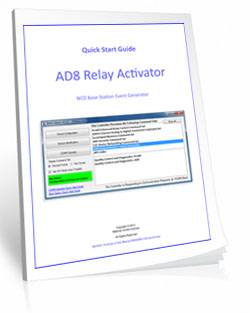
Control relays with a switch or button connected directly to the board for manual control. For full details download the AD8 Relay Activator Quick Start Guide.
Relay Activator
Relay Activator and Analog Inputs
Base Station Software's Relay Activator is ideal for applications that primarily rely on computer control but still require occasional manual operation. By connecting external buttons or switches, you can take direct, hands-on control of any relay without giving up software-based control.This creates true bi-directional control. For example, a relay can be turned ON through the computer interface and later turned OFF using a physical switch - or vice versa. Whether you're testing, troubleshooting, or building a hybrid manual/software-controlled system, Relay Activator keeps everything synchronized and predictable.
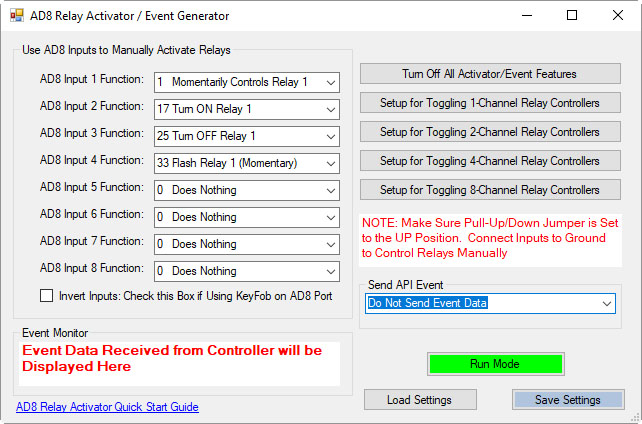 As shown in the example, each input includes a pull-down menu that allows you to select exactly how that input will control a relay. This makes configuration fast and intuitive - simply choose the desired action for each input without writing any code.
Each of the 8 input channels can be configured to control relays 1 through 8, with multiple action types available. This flexibility allows every input to perform exactly the function your application requires.
This level of control makes Relay Activator perfect for operator panels, test benches, safety overrides, and any application where manual interaction and software automation need to work together seamlessly.
AD8 Relay Activator Quick Start Guide.
Available Relay Actions per Input
Each input can be assigned one of the following actions:
- Momentary Control - Activates the relay only while the input is engaged
- Toggle Relay State - Alternates the relay between ON and OFF
- Turn Relay ON - Forces the relay into the ON state
- Turn Relay OFF - Forces the relay into the OFF state
- Flash Relay (Momentary) - Pulses the relay while the input is active
- Flash Relay (Toggle) - Toggles flashing behavior ON and OFF
💡 Relay Pros ProTip
Use the Turn Relay OFF action as a panic-stop or fail-safe control. A single button, switch, or sensor input can immediately force one relay - or multiple relays - into the OFF state. This is ideal for emergency stops on machinery, instantly disabling door locks, or overriding automation logic when a quick shutdown is required.AD8 with N-Button
Using N-Button software, you can control relays, build desktop meters that show real-time readings from the AD8 inputs. You can also create automatic push notifications messages triggered by those sensor values.
N-Button Software
Using A/D Inputs with N-Button
N-Button Lite and Pro support powerful A/D Input Automation rules that allow you to automatically control relays based on analog input levels. Simply define a voltage threshold or range, and N-Button will energize or de-energize relays as conditions change.N-Button also supports Send Email and Text Message actions (Push Notifications), enabling automatic alerts when an A/D input reaches a specific level or falls within a defined range. Relay control and notifications can work together seamlessly, all driven by live A/D input data.
Works Seamlessly with N-Button Software
 Each A/D channel supports industry-standard 0-5V inputs, making it simple to integrate a wide range of sensors without extra hardware. Using N-Button, you can:
- Build desktop meters that show real-time sensor data
- Create dashboards with multiple sensor feeds
- Trigger Push Notification alerts from A/D thresholds
- Control relays based on sensor conditions - no programming required
Using the Input Information
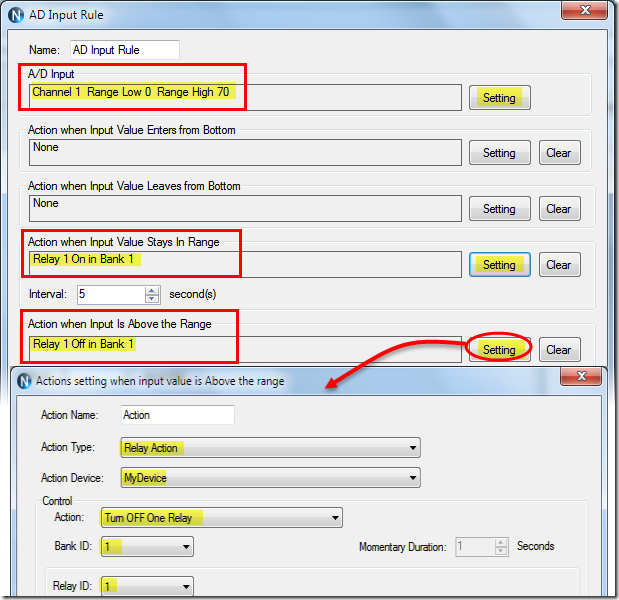 N-Button allows you to use A/D input values in multiple ways without writing code. Numeric values or value ranges can be used to:
- Trigger text or email alerts when thresholds are exceeded
- Control individual relays or banks of relays
- Display live readings on customizable desktop meters
Control Relays with A/D Inputs
N-Button Lite/Pro software makes it incredibly easy to automate relay control using A/D input levels from this board. Simply create an Automation rule that links any A/D input channel to any relay channel. When the input voltage reaches the threshold you define, the relay energizes (turns on). When the input drops below that threshold, the relay de-energizes (turns off). No programming required.Precision + Performance
High-resolution readings ensure accurate measurements, even in demanding environments. Stream live data or automate actions based on your input thresholds.Create Desktop Meters
 N-Button software lets you build live desktop meters that display real-time readings from the AD8 inputs, giving you constant visibility of your sensor data right on your screen. In the example shown, a "Live Soil Moisture Reading" meter provides instant feedback on soil conditions. Right below the meter, Relay 1 and Relay 2 buttons allow you to manually control relays directly from your desktop, or see their current status at a glance - the buttons change color to indicate whether a relay is on or off, giving you a complete view of your system in real time.
Each meter can be individually labeled, like the "Soil Moisture" label shown, making it easy to identify each sensor at a glance. Meter increments are fully customizable - the "Customizable Increments" callout shows how you can adjust the scale to match your application, whether you need fine-grained precision or a broader overview.
N-Button also allows you to arrange multiple meters on your desktop, creating a personalized dashboard that updates in real time. This makes it simple to compare different sensors side by side, spot trends, and react quickly if readings go outside expected ranges (unless you have the relays set automatically). Whether you're monitoring a single sensor or a full set of eight, N-Button makes live data monitoring intuitive and actionable.
Push Notification
N-Button software also includes a powerful point-and-click messaging system that sends alerts to the recipients you choose. Because N-Button runs on your PC, it can automatically deliver text messages and/or emails directly from your computer.Send SMS and email alerts when voltage levels are reached. Customize the subject and message to identify exactly what triggered the alert. You can even set repeat notifications at a defined interval until the input level returns to normal.
Visit our N-Button Page
Scales from Simple to Full Automation
N-Button Lite turns your PC into a powerful relay and sensor control system - no programming required. Create desktop buttons, live meters, and automation rules that control relays, monitor A/D inputs, and send alerts in real time. It's point-and-click control that scales from simple manual operation to full automation across multiple boards.
N-Button Lite - Full Relay Control
Relay Software
N-Button Lite is third-party software (sold separately) that gives you full relay control and real-time A/D input monitoring without writing a single line of code. It may look simple at first glance, but don't let that fool you - this is a surprisingly powerful tool with a wide range of real-world applications.Create desktop buttons and meters, monitor live input values, and control relays instantly - all from an intuitive point-and-click interface.
Create Buttons & Widgets
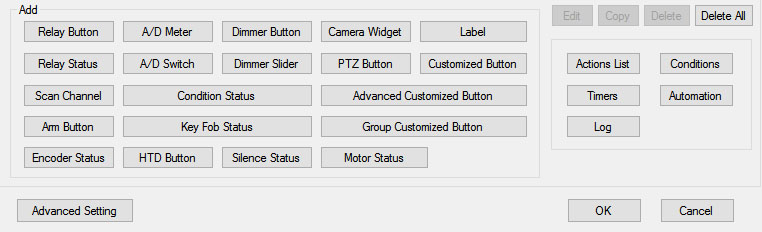 N-Button Lite/Pro lets you build floating desktop widgets that can:
- Control relays and read inputss
- Create buttons to control relays
- Read A/D inputs
- Create live meters from inputs
- Launch applications
N-Button also includes special widgets designed specifically for the boards on this site.
💡 Relay ProTip:
Start with simple manual buttons in N-Button Lite, then layer in automation rules once you're comfortable. You don't have to build everything at once.
Supports Up To 16 Widgets
N-Button Lite offers the same widget types as the Pro version but is limited to 16 total widgets - perfect for smaller setups or budget-friendly applications.Need more? You can upgrade to N-Button Pro at any time.
USB and Network Compatible
N-Button Lite works over Serial/USB or Network connections between your computer and the relay board. Add or modify widgets easily using N-Button Lite Manager to create the exact look and behavior you want. N-Button Lite supports this relay board and any ProXR Relay board with up to 16-widgets.Control Multiple Boards
N-Button Lite software can control multiple devices connected to the same computer or network, allowing you to manage relays, inputs, meters, and automation across several boards from a single interface. Use the built-in Device Manager to easily add, remove, or modify boards and maintain a clear list of all connected devices. Each device is handled independently, making it easy to build scalable systems without adding complexity.For example, a single PC can monitor A/D inputs on one board while controlling relays on multiple network-connected boards.
Relay Control with N-Button
Create buttons on your computer's desktop that can control relys and show their status in real time. Buttons can be configured to control each relay on the board.
Relay Control
Create Relay Buttons
Relay Button Widgets are the heart of N-Button. They let you turn relays ON or OFF instantly from your desktop - no programming, no scripting, and no setup headaches. Using an intuitive point-and-click interface, you can create exactly the type of control you need in seconds.Create:
- A simple ON button
- A simple OFF button A toggle button (one click ON, next click OFF)
 |
 |
 |
 |
Create Buttons That Show Status
Relay Status Widgets automatically reflect the live state of each relay. As shown in the example, buttons can change color based on whether a relay is ON or OFF, so a quick glance at your screen tells you exactly what's happening in real time.This visual feedback reduces guesswork and makes it easy to monitor multiple relays at once - especially in systems where knowing the current state is just as important as controlling it.
Create Custom Buttons
Custom Buttons give advanced users access to the full power of the ProXR Command Set, one of the most advanced relay command systems in the industry. With N-Button Lite, you can send any supported ProXR command with a single button press - all without needing to write or compile code.Each button can be fully customized to match your workflow. Change the button color, shape, and label, and configure colors to automatically update based on relay status. In the example shown, different colors clearly indicate ON and OFF states, making relay control both intuitive and visually unmistakable.
Whether you need simple control, live status feedback, or advanced command execution, N-Button buttons give you fast, flexible, and reliable control right from your desktop.
AD8 with N-Button
Using N-Button software, you can control relays, build desktop meters that show real-time readings from the AD8 inputs. You can also create automatic push notifications messages triggered by those sensor values.
Using A/D Inputs with N-Button
A/D Inputs
All ProXR Lite boards and ProXR boards that begin with ZADR or ZADSR include an onboard 8-channel Analog-to-Digital converter in addition to relay control. Each channel accepts a 0-5V DC input and converts it into a numeric value for processing.Using the AD8 Command Set, analog voltages are translated into digital values (8- or 10-bit resolution, depending on configuration), making it easy to monitor and act on sensor data from a wide range of devices.
Control Relays Based on Analog Input Levels
N-Button Lite and Pro support powerful A/D Input Automation rules that allow you to automatically control relays based on analog input levels. Simply define a voltage threshold or range, and N-Button will energize or de-energize relays as conditions change.N-Button also supports Send Email and Text Message actions (Push Notifications), enabling automatic alerts when an A/D input reaches a specific level or falls within a defined range. Relay control and notifications can work together seamlessly, all driven by live A/D input data.
Works Seamlessly with N-Button Software
Each A/D channel supports industry-standard 0-5V inputs, making it simple to integrate a wide range of sensors without extra hardware. Using N-Button, you can:- Build desktop meters that show real-time sensor data
- Create dashboards with multiple sensor feeds
- Trigger Push Notification alerts from A/D thresholds
- Control relays based on sensor conditions - no programming required
Using the Input Information
N-Button allows you to use A/D input values in multiple ways without writing code. Numeric values or value ranges can be used to:- Trigger text or email alerts when thresholds are exceeded
- Control individual relays or banks of relays
- Display live readings on customizable desktop meters
Control Relays with A/D Inputs
N-Button Lite/Pro software makes it incredibly easy to automate relay control using A/D input levels from this board. Simply create an Automation rule that links any A/D input channel to any relay channel. When the input voltage reaches the threshold you define, the relay energizes (turns on). When the input drops below that threshold, the relay de-energizes (turns off). No programming required.Precision + Performance
High-resolution readings ensure accurate measurements, even in demanding environments. Stream live data or automate actions based on your input thresholds.Create Desktop Meters
N-Button software lets you build live desktop meters that display real-time readings from the AD8 inputs, giving you constant visibility of your sensor data right on your screen. In the example shown, a "Live Soil Moisture Reading" meter provides instant feedback on soil conditions. Right below the meter, Relay 1 and Relay 2 buttons allow you to manually control relays directly from your desktop, or see their current status at a glance - the buttons change color to indicate whether a relay is on or off, giving you a complete view of your system in real time.
Each meter can be individually labeled, like the "Soil Moisture" label shown, making it easy to identify each sensor at a glance. Meter increments are fully customizable - the "Customizable Increments" callout shows how you can adjust the scale to match your application, whether you need fine-grained precision or a broader overview.
N-Button also allows you to arrange multiple meters on your desktop, creating a personalized dashboard that updates in real time. This makes it simple to compare different sensors side by side, spot trends, and react quickly if readings go outside expected ranges (unless you have the relays set automatically). Whether you're monitoring a single sensor or a full set of eight, N-Button makes live data monitoring intuitive and actionable.
Push Notification
N-Button software also includes a powerful point-and-click messaging system that sends alerts to the recipients you choose. Because N-Button runs on your PC, it can automatically deliver text messages and/or emails directly from your computer.Send SMS and email alerts when voltage levels are reached. Customize the subject and message to identify exactly what triggered the alert. You can even set repeat notifications at a defined interval until the input level returns to normal.
Control More Than Just Relay Boards
 Your widgets aren't limited to relay boards. You can configure buttons to:
- Send custom serial/IP data
- Open files, folders, or programs
- Launch applications
- Send HTTP requests
- Trigger data lists
N-Button Videos
Building a Power Budget
Get reliable performance every time! Use these real-world specs to build accurate power budgets, protect your board, and ensure every relay and module runs smoothly under any conditions.
Power & More
"Reliable Power = Reliable Switching"
20/30 Amp Board Performance Ratings
This tab brings together the essential performance ratings you'll want to know for NCD 20/30 Amp Relay Controllers and their supported communication modules. You'll find practical electrical requirements, power consumption estimates, operating limits, relay timing details, and more-all based on typical 12VDC operation at 70°F (21°C). Think of it as a reliable snapshot of how our hardware behaves under real-world conditions. Because every installation is unique, some values are estimates and may evolve as designs and testing continue. Use this information as a planning tool to help you choose the right controller, build an accurate power budget, and understand the capabilities built into every NCD 20/30 Amp relay board.20-Amp Relay Amperage Rating
Please Note: The 20-amp Relay is rated for 20 amps on the Normally Open (NO) contact and 10 amps on the Normally Closed (NC) contact.⚠️ Best Practice:
For high-current loads, always use the Normally Open (NO) contact.
The Normally Closed (NC) contact is limited to 10 amps and should only be used for lower-current applications.
Powering from a Battery or Solar Panel?
NCD relay controllers are well-suited for battery-powered and solar-charged applications when operated within the recommended 10 - 15VDC range. This makes them ideal for remote, mobile, and off-grid installations using common 12V battery systems with solar charging. The power consumption data on this page helps you estimate runtime, size your battery, and avoid over-discharge. Staying within the voltage limits ensures stable, reliable operation in long-term battery and solar-powered setups.💡 Relay Pros Pro Tip:
When powering a controller from a battery or solar power, keep voltage between 10-15VDC for reliable operation. Falling outside this range can cause unstable behavior or unexpected resets.
| Specs of NCD SPDT Relay Boards | Minimum | Nominal | Maximum | Notes |
| Operational Voltages | 10VDC | 12VDC | 15VDC | |
| Standby Power Consumption | 35mA | 100mA | 200mA | No Active Relays, No Com Module |
| Relay Power Consumption | 28mA | 35mA | 60mA | Consumption of Each Activated Relay |
| Operational Temperature Range | -40°F (-40°C) | 70°F (21°C) | 185°F (85°C) | Theoretical Component Limits Shown |
| Storage Temperature Range | -67°F (-55°C) | 70°F (21°C) | 185°F (85°C) |
Theoretical Component Limits Shown |
| Operational Ambient Air Humidity | 0% | 50% | 70% | Non-Condensing Humidity Values Shown |
| Relay Activation Time | 15ms | Needs Further Validation | ||
| Relay Deactivation Time | 10mS | Needs Further Validation | ||
| Operational Life Mechanical | 10,000,000 | Component Operation Rating | ||
| Operational Life Electrical | 100,000 | Component Rating at Maximum Load |
Communication Modules
Communication Module Specifications
This table provides a quick, clear overview of all NCD Communication Modules. While each module operates at 3.3VDC, the values shown here reflect the impact on a 12VDC master controller at 70°F (21°C). Use the maximum ratings for power-budget planning - they represent short-term peak consumption and may include estimated values that are updated as modules evolve.| Specs of NCD Communication Modules | Minimum | Nominal | Maximum | Notes |
| Operational Temperature Range | -40°F (-40°C) | 70°F (21°C) | 185°F (85°C) | Theoretical Component Limits Shown |
| Storage Temperature Range | -67°F (-55°C) | 70°F (21°C) | 185°F (85°C) | Theoretical Component Limits Shown |
| Operational Ambient Air Humidity | 0% | 50% | 70% | Non-Condensing Humidity Values Shown |
| USB Module Power Consumption | N/A | N/A | N/A |
USB Modules are Powered by the USB Port Do Not Consume Device Current |
| RS-232 Module Power Consumption | 10mA | 20mA |
|
|
| Ethernet Module Power Consumption | 58mA | 82mA | 100mA | |
| WiFi Bluetooth USB Module Power Consumption | 37mA | 50mA | 100mA | Up to 300 Foot Indoor Wireless Range, Unobstructed. Up to 50 Foot Range Through Walls |
| 900MHz Wireless Module Power Consumption | 13mA | 30mA | 50mA | Up to 1,000 Foot Indoor Wireless Range, up to 2 Mile Outdoor Wireless Range using Included Antennas. Up to 28 Miles Outdoor Wireless Range using High-Gain Antennas. |
| KFX Wireless Key Fob | 11mA | 15mA | 25mA | Up to 200 Feet Outdoor Wireless Range using 1, 2, 3, 4, or 5 Button Key Fobs. Up to 700 Feet Outdoor Wireless Range using 8-Button Remotes |
A/D Inputs
AD8 Analog Input Usage Notice
Analog inputs should never have voltage applied when the controller is powered down. If your application requires voltage to remain on an input, add a 220-ohm current-limiting resistor to each channel to protect the controller from damage. Keep all analog inputs within the 0 - 5VDC range - exceeding this limit can permanently damage the on-board CPU. Most inputs include a 10K pull-up or pull-down resistor to keep the line stable when unused, but note that this resistor may introduce a slight bias in readings for certain sensors.Accessories
Power Supply
 The PWR12 is regulated power supply providing clean power necessary for
the performance of these boards. The PWR12 US power supply is a 120VAC to 12VDC 1.25A 60Hz regulated
power supply and it plugs into the barrel connector on the board. The output connector is a 2.1mm I.D. x 5.5mm
O.D. x 9.5mm R/A barrel connector.
The PWR12 is regulated power supply providing clean power necessary for
the performance of these boards. The PWR12 US power supply is a 120VAC to 12VDC 1.25A 60Hz regulated
power supply and it plugs into the barrel connector on the board. The output connector is a 2.1mm I.D. x 5.5mm
O.D. x 9.5mm R/A barrel connector.
Click Here for More
Wireless Modem
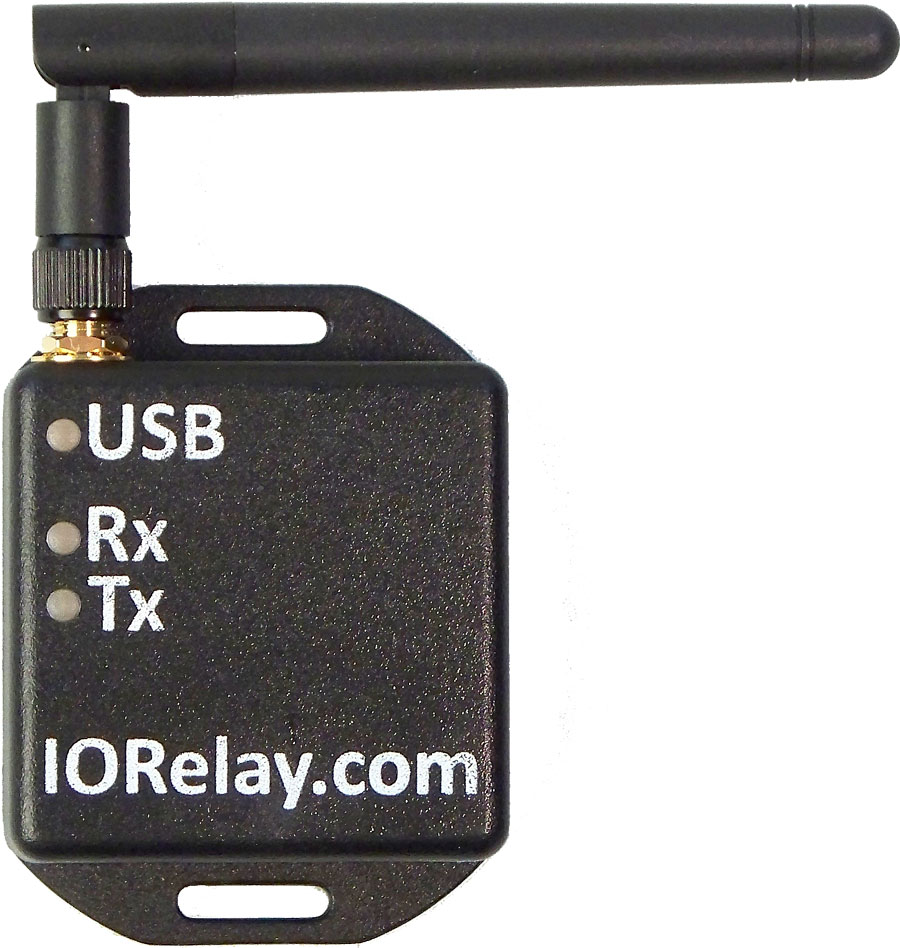 Not required when integrating into an existing XBee-PRO 900HP mesh network. Plug the 900HP-S3B
modem into the USB port of your computer. The modem installs as a virtual COM port, allowing your software to
send data exactly the same way as a wired controller. The modem can broadcast commands to all Wireless
XSC-compliant devices within range. Click for More
Not required when integrating into an existing XBee-PRO 900HP mesh network. Plug the 900HP-S3B
modem into the USB port of your computer. The modem installs as a virtual COM port, allowing your software to
send data exactly the same way as a wired controller. The modem can broadcast commands to all Wireless
XSC-compliant devices within range. Click for More
Enclosure
 The TFL Enclosure is an undrilled, non-waterproof enclosure and is available at checkout for this controller.
TFL Spec Sheet
CAD Drawing: TFL CAD Drawing
3D Model: TFL_3D
Induction Suppression
Adding
an induction suppression capacitor protects your relay contacts and keeps everything running smoothly.
Capacitors are available at checkout, and our Induction Suppression Page has
wiring diagrams and more details. Anything with a magnetic coil (motors, solenoids, transformers, etc.) generates high-voltage "kickback" when switched. Without
a suppression capacitor, that spike can shorten the relay lifespan and cause electrical noise that disrupts the microcontroller
Quick Disconnect Terminal
 Wiring is done directly to the Relay terminals using a common 1/4" quick disconnect terminal. These quick-disconnect
insulated spade wire terminals offer the fastest way to connect and disconnect wires to the relay. Easy to Apply:
Crimp with pliers after inserting the wire, no soldering required, making electrical maintenance and wiring work easier
and more efficient.
Wiring is done directly to the Relay terminals using a common 1/4" quick disconnect terminal. These quick-disconnect
insulated spade wire terminals offer the fastest way to connect and disconnect wires to the relay. Easy to Apply:
Crimp with pliers after inserting the wire, no soldering required, making electrical maintenance and wiring work easier
and more efficient.
N-Button Lite
N-Button
Lite is third-party software (sold separately) that gives you full relay control and real-time A/D input
monitoring without writing a single line of code. Create desktop buttons and meters, monitor live input values, and control relays instantly - all from an intuitive point-and-click interface. Click Here for More
Relay Timer R1X
 Relay Timer
Software allows you control the relay from a time schedule you create! The software can be installed on a PC and uses the
computers time for an accurate time control. Enter the modem's COM Port to access the board through a wireless connection.
change and override the time schedule from anywhere on the network the software is loaded. Look for Relay Timer R1X during checkout.
Relay Timer
Software allows you control the relay from a time schedule you create! The software can be installed on a PC and uses the
computers time for an accurate time control. Enter the modem's COM Port to access the board through a wireless connection.
change and override the time schedule from anywhere on the network the software is loaded. Look for Relay Timer R1X during checkout.
Click Here for More
Instant Control & Diagnostics
Free Base Station software gives you full, hands-on control of your controller the moment you plug it in. It automatically identifies your board, loads the correct interface, and lets you test, control, and verify every supported feature - making setup, learning, and troubleshooting fast and frustration-free.
Base Station Software
"Every feature, every device - no other board has this kind of software"
Compatible with All Boards on this Site
Base Station is a free software download that works by talking directly to your controller to identify the model, then automatically loads the correct graphical interface for controlling and testing that device. It's a great way to learn how any NCD controller works and doubles as a powerful diagnostic tool to verify your device is operating as designed.Base Station exercises every supported feature on every supported device. For learning, testing, and troubleshooting NCD boards, this is the ultimate reference tool.

Useful Features
There are some useful features to look for when using Base Station Software to control, test, or configure your device:- Links to Quick Start Guides and documentation
- Discovery of network devices with IP address display
- Command Set Window for viewing raw commands (especially helpful for ProXR users)
- Base Station displays commands in decimal or hexadecimal formats.
- Relay Activator with Analog Inputs
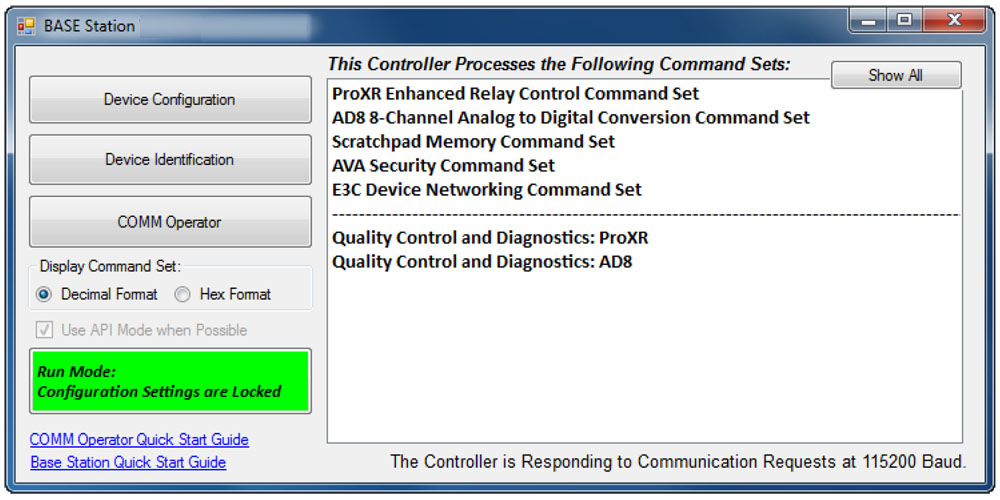
Device Identification
Click the Device Identification window to view important read-only info about your controller.Watch for the field labeled "Documentation Related to this Controller" - it's a complete list of articles connected to your device. Click any entry to open it. (Internet required.)
All devices released in 2012 and later support Device Identification.
Device Command Sets
Base Station asks the controller which command sets it supports, then displays them when the software launches. Some devices show more command sets, others fewer - it's always based on the board.
ProXR users can access the entire ProXR Command Set to turn relays on/off and run every available function.
Control All ProXR Functions
Turn relays on or off, read relay status, monitor inputs - Base Station gives full ProXR control through a clean point-and-click interface.For programmers, Base Station also shows every command being sent to the board, making it a great tool for learning and development.
💡 Relay Pros Pro Tip:
Use Base Station as a Command Generator! Base Station is not only a control interface - it is also a powerful development tool. Click the More button in the upper-right corner of the window to expand the interface and display the command output being sent to the controller. As you operate relays using the point-and-click controls - including toggle commands, timers, and flashers - the software displays the exact command being transmitted.
Developers can use this feature to quickly determine the decimal or hexadecimal commands required for heir own software without manually building commands from the documentation.
AD8 Relay Activator
Control relays with a switch or button connected directly to the board for manual control. For full details download the AD8 Relay Activator Quick Start Guide.
Relay Activator
Relay Activator and Analog Inputs
Base Station Software's Relay Activator is ideal for applications that primarily rely on computer control but still require occasional manual operation. By connecting external buttons or switches, you can take direct, hands-on control of any relay without giving up software-based control.This creates true bi-directional control. For example, a relay can be turned ON through the computer interface and later turned OFF using a physical switch - or vice versa. Whether you're testing, troubleshooting, or building a hybrid manual/software-controlled system, Relay Activator keeps everything synchronized and predictable.
As shown in the example, each input includes a pull-down menu that allows you to select exactly how that input will control a relay. This makes configuration fast and intuitive - simply choose the desired action for each input without writing any code.
Each of the 8 input channels can be configured to control relays 1 through 8, with multiple action types available. This flexibility allows every input to perform exactly the function your application requires.
Available Relay Actions per Input
Each input can be assigned one of the following actions:
- Momentary Control - Activates the relay only while the input is engaged
- Toggle Relay State - Alternates the relay between ON and OFF
- Turn Relay ON - Forces the relay into the ON state
- Turn Relay OFF - Forces the relay into the OFF state
- Flash Relay (Momentary) - Pulses the relay while the input is active
- Flash Relay (Toggle) - Toggles flashing behavior ON and OFF
AD8 Relay Activator Quick Start Guide.
💡 Relay Pros ProTip
Use the Turn Relay OFF action as a panic-stop or fail-safe control. A single button, switch, or sensor input can immediately force one relay - or multiple relays - into the OFF state. This is ideal for emergency stops on machinery, instantly disabling door locks, or overriding automation logic when a quick shutdown is required.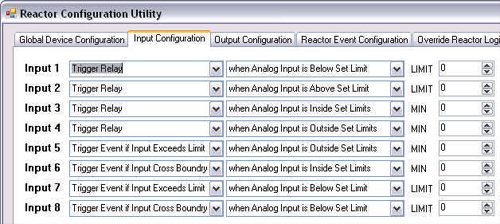
Reactor Users
Reactor Events Settings
All Reactor configuration is handled inside Base Station.You can define when a relay or event activates based on the voltage readings of analog inputs. Inputs can trigger relays directly or trigger timed events.
The Reactor GUI only appears when Base Station detects a Reactor board, and some functions may not display for other board types.
TaraList Users
TaraList Setup
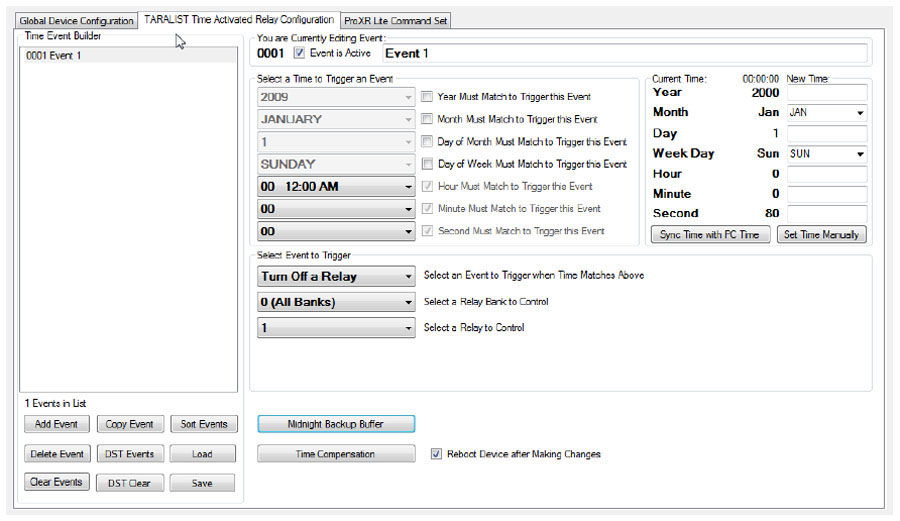
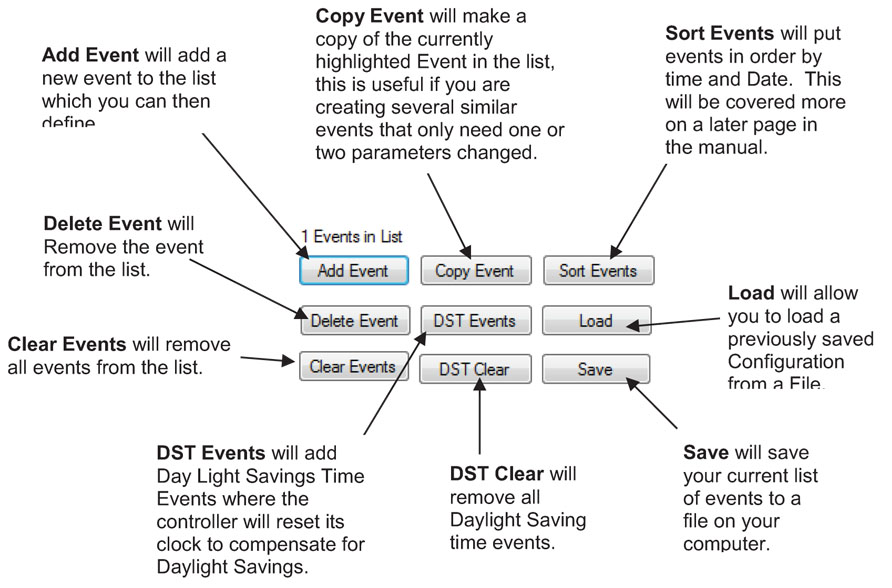
Base Station includes configuration tools and scheduling upload controls for TaraList Time Activated Boards.TaraList users will see setup pages for creating and uploading time schedules. ProXR users won't - those pages appear only when Base Station detects a TaraList controller.
Software Options


 Not a programmer and these boards look intimidating? Don't worry. Powerful software tools make it easy to get connected, discover attached devices, monitor inputs in real time, and control relays without writing a single line of code. Create on-screen buttons, desktop meters, timed events, and automated actions that respond to inputs, schedules, or system conditions - all from an intuitive graphical interface.
Base Station
Base Station software supports every feature on any ProXR board - no other controller manufacturer even comes close to offering this type of software. Download Base Station.
Base Station Software
Compatible with ALL Boards on This Site
Base Station is a free software download that works by talking directly to your controller to identify the model, then automatically loads the correct graphical interface for controlling and testing that device. It's a great way to learn how any NCD controller works and doubles as a powerful diagnostic tool to verify your device is operating as designed.Base Station exercises every supported feature on every supported device. For learning, testing, and troubleshooting NCD boards, this is the ultimate reference tool.
User Interface
Base Station gives you a list of command sets supported by your controller. Just click any item once to open the custom graphical interface that was created alongside the firmware. Each command set corresponds with a module installed inside your device."
Device Identification
Click the Device Identification window to view important read-only info about your controller.Watch for the field labeled "Documentation Related to this Controller" - it's a complete list of articles connected to your device. Click any entry to open it. (Internet required.)
All devices released in 2012 and later support Device Identification.
Device Command Sets
Base Station asks the controller which command sets it supports, then displays them when the software launches. Some devices show more command sets, others fewer - it's always based on the board.
ProXR users can access the entire ProXR Command Set to turn relays on/off and run every available function.
Control All ProXR Functions
Turn relays on or off, read relay status, monitor inputs - Base Station gives full ProXR control through a clean point-and-click interface.For programmers, Base Station also shows every command being sent to the board, making it a great tool for learning and development.
Useful Features
There are some useful features to look for when using Base Station Software to control, test, or configure your device:- Links to Quick Start Guides and documentation
- Discovery of network devices with IP address display
- Command Set Window for viewing raw commands (especially helpful for ProXR users)
- Relay Activator with Analog Inputs
Configure Buttons
N-Button Lite lets you create on-screen buttons to control relays and view their status - no programming needed. You can also build real-time meters to monitor variable input sensors connected to your board.
N-Button Lite - Full Relay Control
Relay Software
N-Button Lite is third-party software (sold separately) that gives you full relay control and real-time A/D input monitoring without writing a single line of code. It may look simple at first glance, but don't let that fool you - this is a surprisingly powerful tool with a wide range of real-world applications.Create desktop buttons and meters, monitor live input values, and control relays instantly - all from an intuitive point-and-click interface.
Create Buttons & Widgets
N-Button Lite/Pro lets you build floating desktop widgets that can:
- Control relays and read inputss
- Create buttons to control relays
- Read A/D inputs
- Create live meters from inputs
- Launch applications
N-Button also includes special widgets designed specifically for the boards on this site.
Lite vs. Pro
N-Button Lite includes the same buttons and widgets as the Pro version, but is limited to 16 total widgets. It's ideal for maller projects or cost-conscious applications where you still want full functionality. If your project grows, N-Button Pro removes the limit and supports up to 255 widgets.USB and Network Compatible
N-Button Lite works over Serial/USB or Network connections between your computer and the relay board. Add or modify widgets easily using N-Button Lite Manager to create the exact look and behavior you want. N-Button Lite supports this relay board and any ProXR Relay board with up to 16-widgets.Control Multiple Boards
N-Button Lite software can control multiple devices connected to the same computer or network, allowing you to manage relays, inputs, meters, and automation across several boards from a single interface. Use the built-in Device Manager to easily add, remove, or modify boards and maintain a clear list of all connected devices. Each device is handled independently, making it easy to build scalable systems without adding complexity.For example, a single PC can monitor A/D inputs on one board while controlling relays on multiple network-connected boards.
Time Control Software

 We offer two timer software options to support different types of automation needs: Relay Timer and Quick Timer. Relay Timer is designed for time-of-day scheduling, allowing relays to turn on and off automatically based on the computer's clock - ideal for daily routines and long-term automation. Quick Timer focuses on duration-based control, running relay sequences for a defined length of time that you manually start, making it well suited for test cycles, timed processes, and repeatable sequences.
 Choose the timer that best matches whether your application depends on when an action occurs or how long it runs.
Time Schedule Relay Control
Relay Timer software makes it easy to turn relays on and off automatically at times you choose. Create repeating schedules - daily, weekly, monthly, or on specific days - and connect using USB, serial, or your network.
Relay Timer
Time Schedule Control
Relay Timer is third-party software (sold separately) that works with all ProXR and ProXR Lite relay controllers and supports every available interface - USB, wired, wireless, and network. No matter how your board is connected, Relay Timer communicates seamlessly to deliver reliable, scheduled relay control.Precision Scheduling Using Your Computer's Clock
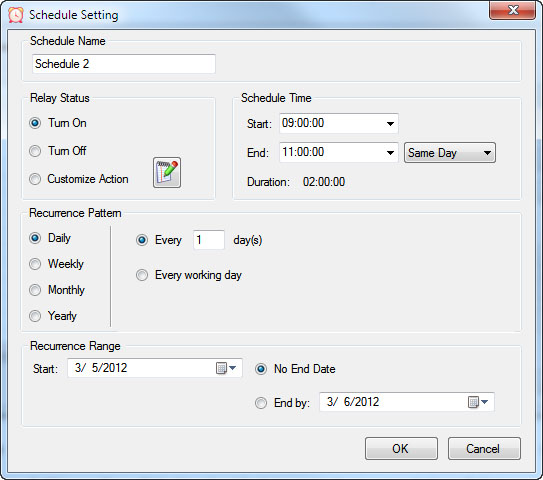 Relay Timer uses the computer's system clock to maintain accurate, drift-free timing. This ensures relay actions stay perfectly synchronized with other applications running on the same machine, such as time clocks or automation software.
A high-resolution timing engine - similar to those used in multimedia applications - provides timing accuracy down to 5 - 10 milliseconds, making Relay Timer well suited for real-time and precision-based control tasks.
High-Speed, Multi-Relay Control
Relay Timer can update up to eight relays simultaneously using the ProXR and ProXR Lite communication protocol. When speed matters, all eight relays can be updated in approximately 30 milliseconds.In multi-relay applications, Relay Timer calculates the state of all relays together, even though each relay operates independently. This ensures fast, coordinated, and predictable behavior across complex schedules.
Take Manual Control
At any time, you can manually take control of a relay to interrupt the active schedule. Resume automatic operation instantly or set a specific time for the software to return to scheduled control - ideal for maintenance, testing, or temporary overrides such as school bells for assemblies.Duration-Based Relay Control
QuickTimer lets you turn relays on or off for a set amount of time - just like setting a timer on an oven or microwave. Once the timer starts, the software handles everything automatically.
Quick Timer
Compatible with ProXR & ProXR Lite Boards
Quick Timer is third-party software (sold separately) that works with all ProXR and ProXR Lite relay controllers and supports every available interface, including USB, wired, wireless, and network connections. The software automatically communicates with your board regardless of how it's connected, making setup quick and straightforward. Designed for responsive, duration-based control, Quick Timer delivers fast, reliable relay operation for timed sequences, test cycles, and repeatable automation tasks.Duration-Based Relay Control (Not Time-of-Day Scheduling)
Quick Timer is designed for applications where how long a relay is energized matters more than what time of day it activates. Instead of using the computer's clock, Quick Timer runs sequences based on a defined time duration.
A sequence is manually started and can:
- Run once and stop automatically, or
- Loop continuously until manually stopped
Flexible Time Sequences Within a Single Duration
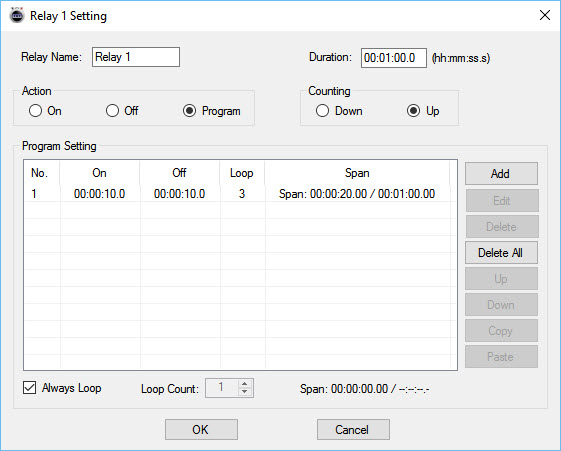 Quick Timer allows you to define a total run duration first. Within that duration, each relay can follow its own independent on/off timing pattern.
Example: 30-Second Sequence
- Relay 1 turns on for 5 seconds, then off for 5 seconds
- Relay 2 turns off for 5 seconds, then on for 5 seconds
- Relay 3 turns on for the first 10 seconds, then off for 20 seconds
- Relay 4 remains off for 10 seconds, then turns on for 20 seconds
Independent Control Per Relay
Each relay can be configured with its own timing behavior while remaining synchronized within the overall sequence duration. This allows complex, coordinated relay patterns without requiring scripting or programming.Manual Override at Any Time
Manual control is always available. Interrupt the active sequence to toggle any relay as needed, then return to automatic operation immediately or at a user-defined time.Built for Real-World Reliability
Quick Timer is designed to handle real-world operating conditions, including communication interruptions, power loss, and system instability. Rather than assuming perfect conditions, the software focuses on predictable behavior and clear user control when issues occur.Confirm Relay Timing in Seconds
Why wait hours - or days - to see if your automation works? Time Travel lets you fast-forward your computer's clock to instantly test Relay Timer schedules and Quick Timer sequences. Jump ahead in time, watch relays trigger exactly when they should, fix issues fast, and get your setup right the first time - no DeLorean required.
Time Travel
Fast-Forward Time for Testing & Automation
Time Travel software answers the age-old question of time travel - at least for your PC. This free utility lets you override and accelerate your computer's clock, making it easy to test time-based automation without waiting in real time. Time Travel is included with Relay Timer, Quick Timer, and N-Button software and is also available as a free standalone download.Instead of waiting hours or days to verify schedules, you can fast-forward time and confirm relay behavior in seconds - saving time, frustration, and repeated test cycles.
Make Time Run Faster
Time Travel can temporarily override your computer's system clock and adjust how fast time runs. Increase the clock speed to simulate long periods instantly - for example, at 3600x speed, a full day passes in just 24 seconds.This makes it easy to validate schedules, sequences, and automation logic without waiting for real-world time to pass.
Ideal for Bench Testing & Development
Time Travel is especially useful for testing any software that relies on the computer's clock, including:
- Relay Timer
- Quick Timer
- N-Button
- Other scheduling or automation applications
Presets & Automatic Time Recovery
Time Travel includes preset configurations that allow you to load saved time and speed settings quickly. Users can create, save, and export presets for future use, and the software remembers the last configuration when restarted.To protect your system, Time Travel automatically restores the computer's clock to the correct local time when the program exits. The system time is only affected while the software is running.
Simple to Use
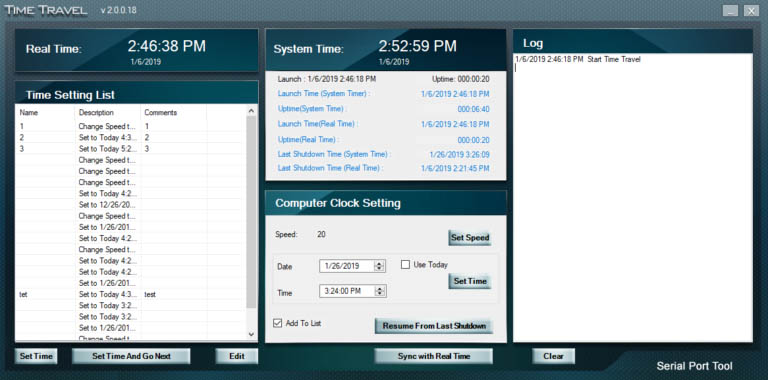 Using ime Travel is straightforward:
- Download and unzip the software
- Run TimeTravel.exe as Administrator
- Current Running Speed - Adjusts how fast the computer clock runs
- Set Time - Changes the computer clock to a specific date and time
- Resume From Last Shutdown Time - Restarts from the last simulated computer time if the system shut down unexpectedly
- Sync with Real Time - Returns the clock to real-time operation (when speed is set to 1x)
Component Library
Visual Studio Samples
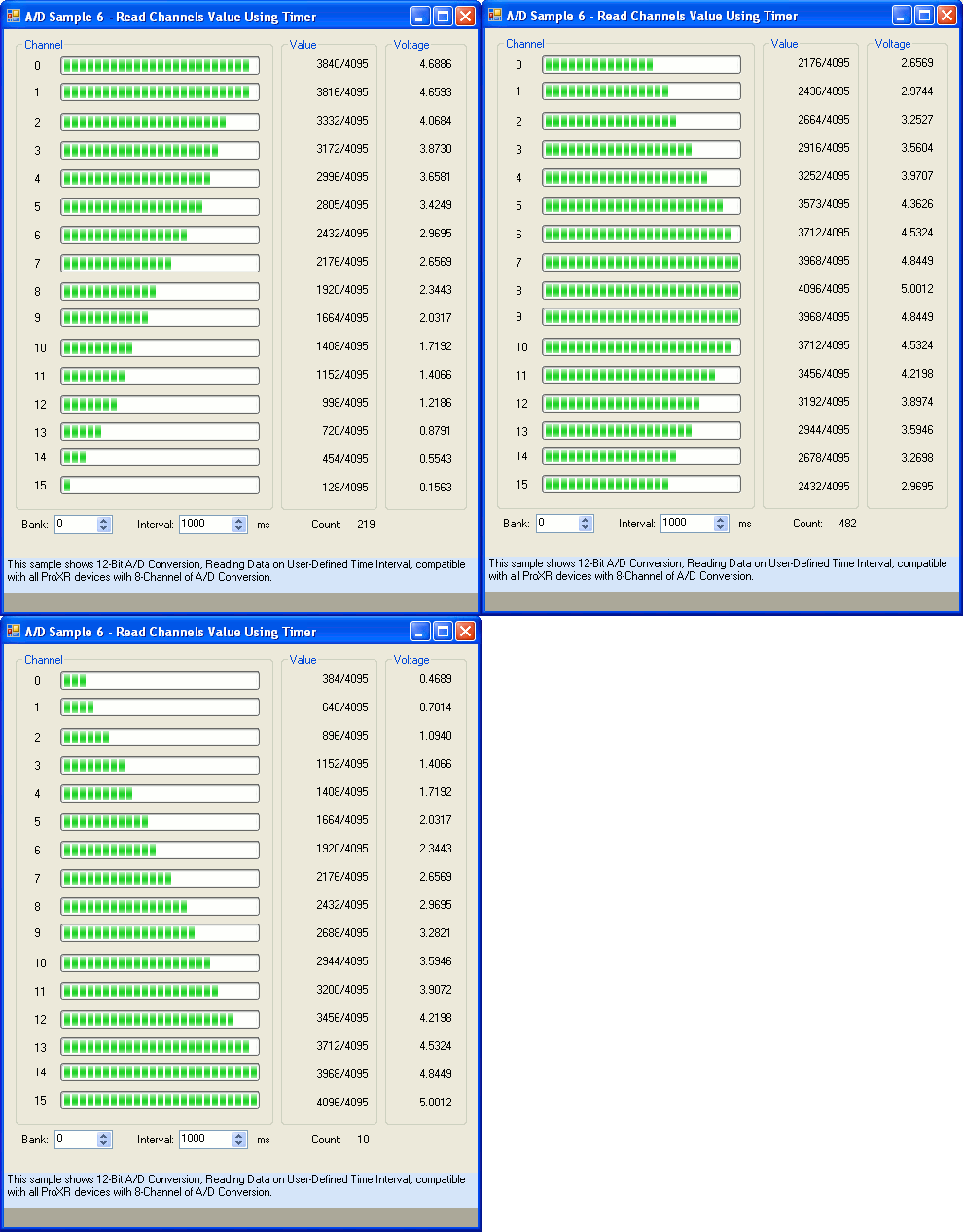 The NCD Component Library is a plug-in for the Visual Studio 2005/2008 that greatly simplifies the communications to the NCD product line. The samples can be run in Visual Studio and fully customizable to your needs. Over 40 fully functional fully working samples are included in this free download.
 Visit our Component Library Page to view all the samples available.
Protect Against Inductive Spikes
Motors, solenoids, contactors and other inductive loads can generate voltage spikes every time they switch on. For just a few dollars, suppression capacitors can help protect relay contacts and extend the life of your control system.
Simple to install and highly recommended for inductive loads, capacitors are one of the easiest ways to improve long-term system reliability.
Induction Suppression
Handling Inductive Loads (Why It Matters)
Inductive loads are anything with a magnetic coil - motors, solenoids, transformers, mag locks, door strikes, etc. These devices generate dangerous voltage spikes when switched on and off.Those spikes can:
- Destroy relay contacts prematurely
- Cause unexpected controller resets
- Knock USB devices offline
- Damage the board's power regulation circuitry
💡 Relay Pros ProTip:
Many customers skip suppression because it seems complicated. In reality, adding a suppression capacitor typically requires only two connection points and can dramatically reduce relay contact wear when switching motors, solenoids and contactors.Why You Need a Capacitor
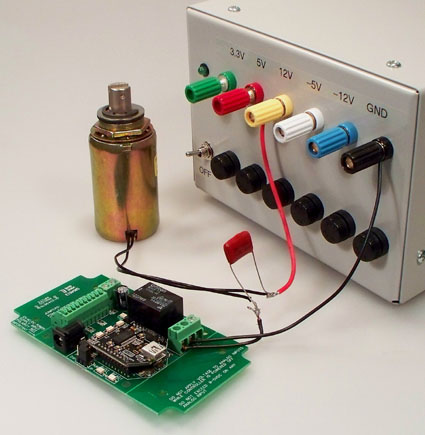 Every time an inductive device switches on, it releases a burst of high-voltage energy.
A suppression capacitor:
- Absorbs these spikes before they reach your relay
- Protects relay contacts from arcing
- Prevents interference with the microcontroller logic
- Helps maintain stable USB or serial communication
Resistive Loads Don't Need Suppression
If you're switching a purely resistive device, such as:- Incandescent/LED lighting
- Heating elements without fans
- Basic resistive appliances
- Using Relay as Dry Contact Output
Choosing the Right Capacitor
 It's simple:
Choose a capacitor with a voltage rating equal to or higher than the voltage of the device you're switching.
Example:
- Switching a 120VAC motor → Use a capacitor rated for 120VAC or higher
- Switching a 24VDC solenoid → Use a capacitor rated for 24VDC or higher
Suppression capacitors can retain a charge for a short period after power is removed. Always discharge capacitors safely before handling.
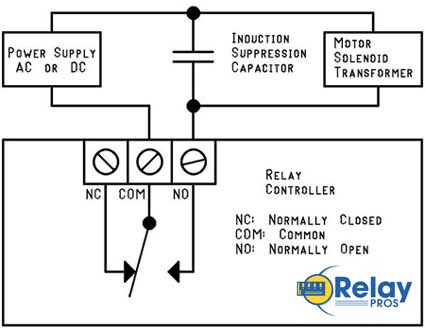
Easy Installation
Installing a suppression capacitor is straightforward:- Mount it as close to the relay as possible
- Connect it in parallel with the inductive load
- Polarity doesn't matter - capacitors used for suppression are not polarized
- Works with both AC and DC loads
Don't Share Power Supplies with Inductive Loads
Your controller must be powered by a clean, regulated power supply.Do not share the same power supply with:
- DC motors
- High-power solenoids
- Any heavy inductive device
The only exception: battery-powered systems (like automotive) where the battery naturally absorbs induction spikes.
Important Note for USB Users
USB is extremely sensitive to electrical noise. An inductive spike can cause the PC's motherboard to drop the USB port entirely.That means:
- Your controller disappears from the OS
- Your application loses communication
- You must unplug and reconnect the board